
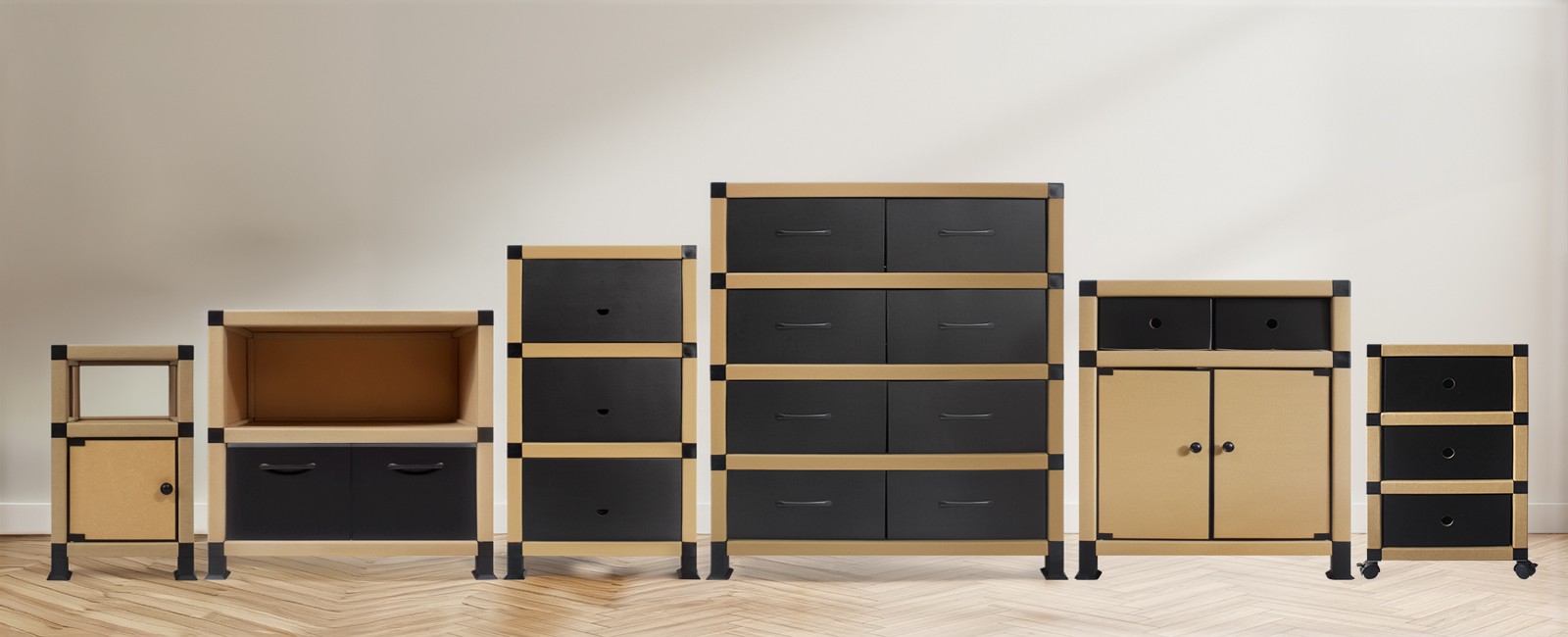
Walk into any furniture showroom today and you will see two worlds side by side. On one side sits conventional furniture — heavy pieces built from particleboard, MDF, virgin plastics, and synthetic foams, held together with formaldehyde-based adhesives and finished with chemical-laden coatings. On the other side, a growing collection of sustainable furniture made from renewable, recyclable, and responsibly sourced materials that aim to leave a lighter footprint on the planet and a healthier atmosphere in your home.
The question is no longer whether sustainable furniture exists — it clearly does, and in growing variety. The real question is whether it offers meaningful advantages over the conventional pieces most people grew up with. After examining the materials, construction methods, health implications, and practical day-to-day use of both categories, the answer is a confident yes. Below is a detailed look at the specific advantages that set sustainable furniture apart.
Conventional furniture relies heavily on virgin timber from unmanaged forests, petroleum-based plastics, and engineered wood panels bonded with synthetic resins. Once these pieces reach the end of their life, most of the materials cannot be separated or recycled, so they end up in landfills where they persist for decades.
Sustainable furniture takes a fundamentally different approach. Manufacturers choose materials that are either rapidly renewable — such as bamboo, cork, and kraft paper — or recovered from existing waste streams. Paper-based furniture, for example, uses high-strength kraft paper tubes and reinforced panels that are fully recyclable at end of life. Unlike MDF or particleboard, which swell and crumble when exposed to moisture and cannot be reprocessed, paper furniture components can be separated, sorted, and sent back through the recycling stream.
This closed-loop approach means fewer raw materials are extracted, less waste is generated, and the furniture you use today does not become an environmental burden tomorrow.
The production of conventional furniture is energy-intensive. Felling and transporting hardwood logs, refining petroleum into polyurethane foam, and firing kilns to produce metal components all consume large amounts of fossil fuel. Engineered wood panels require additional energy to chip, dry, press, and cure with synthetic resins.
Sustainable furniture generally requires less energy to manufacture. Paper-based furniture, for instance, is produced from kraft paper — a material made from wood pulp that undergoes a relatively low-energy pulping and rolling process. Because the resulting furniture is lightweight, transportation-related emissions are also lower. A manufacturer like MINHOU UNIMAX, which has produced paper-based home furnishings since 2009, reports that its furniture weighs roughly 20% to 30% as much as traditional pieces. That weight reduction translates directly into fuel savings across every shipment.
When you choose a green alternative to wood furniture, you are effectively reducing the demand for energy-heavy manufacturing processes and the carbon emissions that come with them.
One of the most overlooked dangers of conventional furniture is what it releases into your air. Particleboard and MDF — the backbone of most flat-pack furniture — are bonded with urea-formaldehyde resins that continue to off-gas formaldehyde for months or even years after purchase. Polyurethane foam cushions release volatile organic compounds (VOCs), and many upholstery fabrics are treated with PFAS chemicals for stain resistance. These substances have been linked to respiratory irritation, hormone disruption, and long-term health risks.
Sustainable furniture avoids these hazards by using materials and finishes that are naturally low in emissions. Paper furniture, for example, contains no polyurethane foam and no synthetic resin-bonded panels. Reputable manufacturers subject their products to independent testing for formaldehyde, heavy metals, and phthalates — and some, like MINHOU UNIMAX, maintain FSC membership and BSCI compliance to demonstrate that their materials meet recognized environmental and social standards.
For families with children, allergy sufferers, or anyone spending extended hours indoors, the air-quality advantage alone can be a compelling reason to switch.
Anyone who has ever moved a solid oak wardrobe up two flights of stairs understands the appeal of lightweight furniture. Conventional wood and metal pieces are dense, cumbersome, and often require two or more people to reposition. This makes rearranging a room, cleaning behind furniture, or relocating to a new home a physical — and sometimes costly — challenge.
Sustainable paper furniture weighs a fraction of its conventional counterpart. The same wardrobe, built from high-strength paper tubes and reinforced panels, can often be lifted and moved by a single person. This portability is especially valuable for renters, students, and anyone living in multi-story buildings where elevator access may be limited. It also means that cleaning, reconfiguring, and seasonal redecorating become simple tasks rather than weekend projects.
Conventional flat-pack furniture has trained consumers to expect a bag of hex wrenches, a confusing instruction sheet, and several hours of frustration. Worse, once assembled, these pieces are often difficult to take apart without damaging the cam locks or dowel joints — meaning they are effectively permanent in their configuration.
Many sustainable furniture designs eliminate this problem entirely. Paper furniture systems typically use multi-prong polypropylene connectors that slot into paper tubes without any tools. You push the components together by hand, and the structure holds firm through interlocking geometry rather than glue or metal hardware. When you need to move or store the piece, you simply pull it apart, stack the flat components, and reassemble it later.
This tool-free, detachable design also means that individual parts can be replaced if damaged — extending the life of the furniture without requiring a full replacement.
Shipping is one of the largest hidden costs — both financial and environmental — in the furniture industry. A fully assembled wooden bookshelf shipped from a factory to a warehouse to a retail store occupies a large volume of truck or container space, much of it filled with air. That inefficiency drives up fuel consumption, emissions, and delivery costs.
Sustainable furniture designed for flat-pack shipping addresses this directly. Paper tubes, panels, and connectors are disassembled and packed in compact cartons that maximize density. More units fit in each shipment, which means fewer trucks on the road, fewer containers on ships, and a lower per-unit carbon cost. For exporters, this efficiency also translates into more affordable shipping for the end customer.
Conventional furniture is typically built as a single, fixed unit. A six-drawer dresser is always a six-drawer dresser, in the same shape and orientation, regardless of whether your needs or living space change. This rigidity often leads to furniture being discarded when it no longer fits a room layout.
Sustainable modular furniture adapts. Cube-based organizer systems, for example, let you add or remove compartments as your storage needs evolve. A recyclable home organizer can start as a compact three-cube unit in a student dormitory, expand to a six-cube configuration in a first apartment, and later serve as a nine-cube shelving system in a family home. The connectors and tubes are reusable, so reconfiguration requires no new hardware and creates no waste.
This adaptability extends across room types. A paper side table can function as a nightstand, a sofa accent table, or a bathroom organizer depending on where it is needed — reducing the total number of furniture pieces a household must own.
The modern housing landscape looks very different from a generation ago. More people rent rather than own, move more frequently, live in smaller spaces, and use rooms for multiple purposes. Conventional furniture — heavy, expensive, and difficult to disassemble — is poorly suited to this lifestyle.
Sustainable paper furniture is purpose-built for flexible living. It is affordable enough to outfit a temporary space without a major investment, light enough to carry up stairs or fit in a car trunk, and easy to disassemble and store between moves. For students furnishing a dormitory, professionals setting up a temporary home office, or event organizers building a pop-up display, this practicality is a decisive advantage.
When the furniture is no longer needed, it can be recycled rather than sent to a landfill — closing the loop in a way that conventional furniture simply cannot match.
A common misconception about sustainable furniture — especially paper-based pieces — is that it is fragile or decorative only. In reality, well-engineered paper furniture uses structural principles borrowed from architecture. High-strength kraft paper tubes are cylindrical columns that distribute load along their length, much like structural pillars. Reinforced panels provide flat load-bearing surfaces, and multi-prong connectors distribute forces across multiple contact points rather than concentrating stress at a single joint.
Manufacturers like MINHOU UNIMAX report that selected structures can support an adult weighing up to 80 kg, and that a fully assembled paper bookshelf can carry a total load of 50 kg. While these figures are manufacturer claims and should be verified for each specific model, they illustrate that paper furniture is engineered for real daily use — not just display.
Surface treatments add further durability. Water- and stain-resistant coatings protect against spills and everyday wear, while plastic foot covers prevent moisture wicking from floors. With proper care — controlling indoor humidity, respecting load limits, and repairing surface damage promptly — paper furniture can provide a service life of one to five years or more, depending on usage conditions.
Sustainable furniture is often assumed to be a premium category — something only available at high prices from boutique brands. While luxury sustainable furniture certainly exists, the category also includes affordable options that undercut conventional furniture on price.
Paper furniture achieves this through material efficiency. Kraft paper is less expensive than hardwood lumber, the manufacturing process is less energy-intensive, and flat-pack shipping keeps logistics costs low. The result is furniture that is accessible to students, first-time renters, and budget-conscious households — without relying on the toxic adhesives and synthetic materials that make cheap conventional furniture harmful.
When you factor in the modular reusability — the ability to reconfigure a single set of components for different rooms and needs over several years — the total cost of ownership becomes even more competitive. One set of paper organizer cubes can serve multiple functions across multiple homes, replacing several pieces of conventional furniture that would each have been bought, used briefly, and discarded.
Conventional furniture supply chains are often opaque. Wood may be sourced from illegally logged forests in one country, shipped to another for processing, assembled in a third, and sold in a fourth — with no clear visibility into labor conditions or environmental practices at any stage.
Sustainable furniture manufacturers are increasingly committed to transparency. Membership in organizations like the Forest Stewardship Council (FSC) ensures that wood-based materials come from responsibly managed forests. Compliance with the Business Social Compliance Initiative (BSCI) signals that workers are treated according to recognized ethical standards. Independent test reports covering formaldehyde emissions, heavy metals, and phthalates provide verifiable evidence that the products meet health and safety benchmarks.
By choosing eco-friendly furniture from manufacturers who publish their certifications and test results, consumers support a supply chain model built on accountability rather than exploitation.
Sustainable furniture is not limited to a single style or room type. Paper-based product lines now cover the full range of household needs:
This breadth demonstrates that sustainable materials are not a niche limitation — they are a versatile foundation for furnishing an entire home.
The advantages of sustainable furniture over conventional furniture are not abstract or theoretical. They are concrete, measurable, and relevant to everyday life. Sustainable furniture uses renewable and recyclable materials instead of virgin timber and petroleum-based plastics. It requires less energy to manufacture and ship. It keeps harmful chemicals out of your indoor air. It is lighter, easier to assemble, simpler to move, and adaptable to changing needs. It performs well under real daily loads. It costs less in many cases. And when it finally reaches the end of its useful life, it can be recycled rather than landfilled.
Paper furniture exemplifies all of these advantages in a single product category. Through high-strength kraft paper tubes, reinforced panels, patented multi-prong connectors, and water-resistant surface treatments, manufacturers like MINHOU UNIMAX have shown that sustainable furniture can be practical, affordable, and genuinely useful — not just a statement of environmental values.
If you are furnishing a rental apartment, setting up a student dormitory, organizing a home office, or simply looking for a lighter, cleaner, and more flexible alternative to heavy conventional pieces, sustainable furniture offers a compelling path forward — one that benefits your home, your health, and the planet at the same time.
