
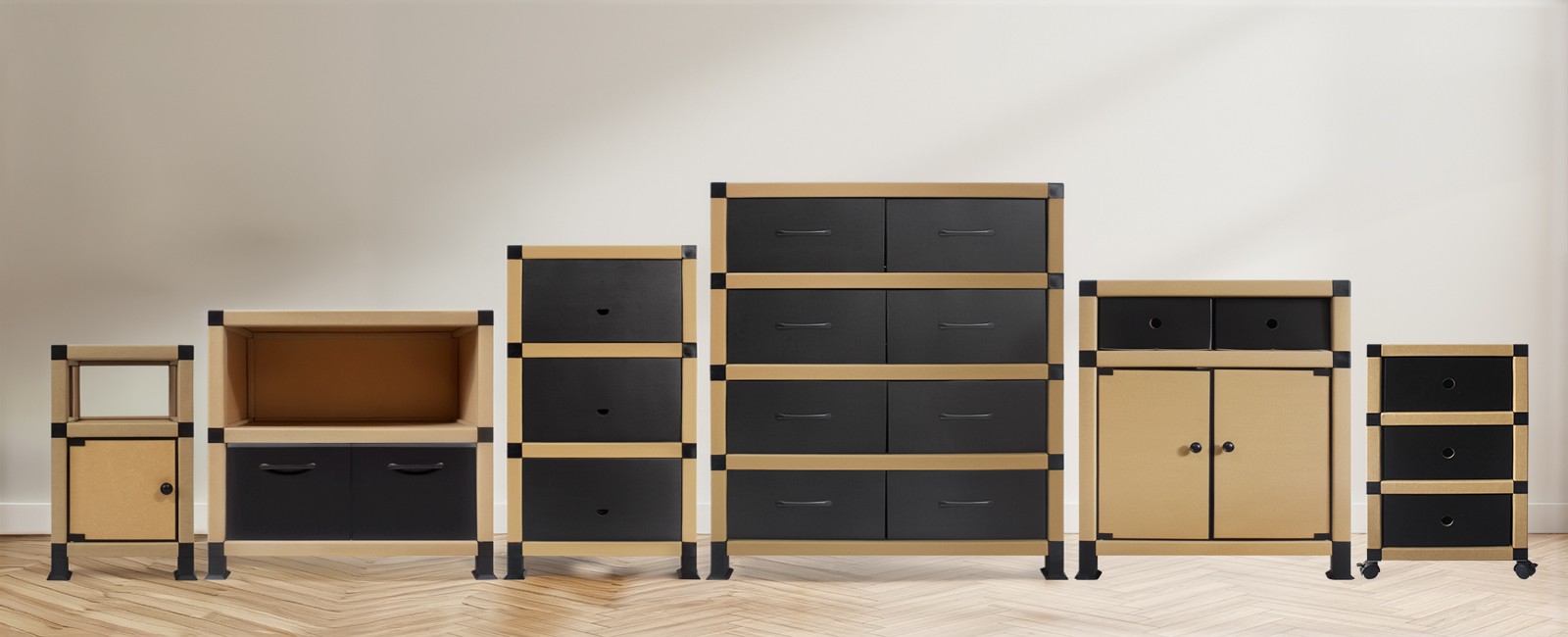
Furnishing a rental apartment or temporary living space has always involved a trade-off: you want furniture that looks good and functions well, but you also need pieces that are easy to move, won't damage walls or floors, and won't end up in a landfill when you relocate. Today, a growing number of renters, students, and urban dwellers are turning to paper furniture as a smart, sustainable middle ground. In this guide, we'll walk through how to choose the right temporary eco furniture solutions for your apartment — so you can live comfortably, stay mobile, and reduce your environmental footprint all at once.
Traditional wood or metal furniture is heavy, expensive, and difficult to move — three things that work against the typical renter. When your lease is up, hauling a solid-wood dresser down three flights of stairs often costs more in time, effort, and moving fees than the piece itself is worth. Many renters simply leave furniture behind, adding to the millions of tons of furniture that end up in landfills every year.
Eco-friendly furniture made from high-strength paper and cardboard solves these problems directly. It's lightweight, flat-packed, tool-free to assemble, and fully recyclable. When you move, you can take it apart in minutes, slide it back into its original box, and carry it to your next place — or recycle it responsibly if it's reached the end of its useful life.
Not all paper furniture is created equal. Look for products using reinforced paper panels and high-strength paper tubes with multi-prong PP connectors — these distribute weight evenly and can support meaningful loads. For reference, a well-designed paper bookshelf can handle up to 50 kg of books and decor.
The whole point of temporary furniture is speed and simplicity. Quality paper furniture assembles without screws, drills, or allen keys. You should be able to put together a nightstand, side table, or bookshelf in 5 to 15 minutes — and take it apart just as quickly when moving day arrives.
Paper furniture has come a long way from basic cardboard. Look for surfaces with a protective nano or water-resistant coating. This is especially important for pieces that will sit near kitchens, bathrooms, or anywhere spills might happen — like bedside tables and sofa side tables.
Shipping volume matters — both for the environment and your wallet. Flat pack furniture disassembles into thin, stackable panels that reduce shipping volume dramatically. It also means you can fit your furniture through narrow doorways, up tight staircases, and into small elevators.
Your bedroom needs storage and surface space, but bulky dressers and heavy nightstands are a renter's worst enemy. Paper bedside tables and paper wardrobes offer a practical alternative.
The living room is where you entertain, relax, and display personal items. Paper furniture excels here because it's modular and reconfigurable — you can rearrange your layout whenever inspiration strikes.
Whether you work from home full-time or just need a spot to pay bills, a well-organized workspace makes a big difference. Paper bookcases and organizers are ideal because they're lightweight enough to reposition if you decide to rearrange your desk setup.
Children grow fast, and their furniture needs change just as quickly. Paper desks, seats, and play tables are lightweight enough for kids to move themselves, and the rounded paper edges are safer than sharp wood or metal corners.
Choosing paper furniture isn't just a practical decision — it's an environmental one. Here's how it stacks up against conventional furniture:
| Factor | Traditional Wood Furniture | Paper & Cardboard Furniture |
|---|---|---|
| Material source | Deforestation, slow regeneration | Recycled kraft paper, renewable |
| End of life | Often ends in landfill | Fully recyclable |
| Shipping emissions | High — heavy, bulky | Low — flat-pack, lightweight |
| Energy to manufacture | High — cutting, milling, finishing | Lower — precision cutting, modular assembly |
| Toxicity | Formaldehyde glues, VOC finishes | Low-formaldehyde, tested materials |
Manufacturers like MINHOU UNIMAX take this a step further with quality control covering material selection, precision cutting, and modular assembly — backed by certifications like BSCI and FSC membership, plus test reports for formaldehyde, load capacity, and phthalates.
Choosing the right temporary eco furniture for your apartment boils down to three things: function, portability, and sustainability. Paper furniture delivers on all three — it's designed for real-world use in small spaces, it's genuinely easy to move and reconfigure, and it leaves a dramatically smaller environmental footprint than conventional alternatives.
Whether you're renting a studio apartment, furnishing a dorm room, outfitting a home office, or setting up a temporary play space, there's a paper furniture solution that fits. By choosing well-engineered pieces with reinforced panels, quality connectors, and water-resistant surfaces, you get furniture that works as hard as you do — without weighing you down or weighing on the planet.
Ready to explore temporary eco furniture for your space? Browse the full range of paper furniture from MINHOU UNIMAX — from bedside tables and wardrobes to bookcases, organizers, and children's furniture — all designed for tool-free assembly, flat-pack shipping, and sustainable living.
