
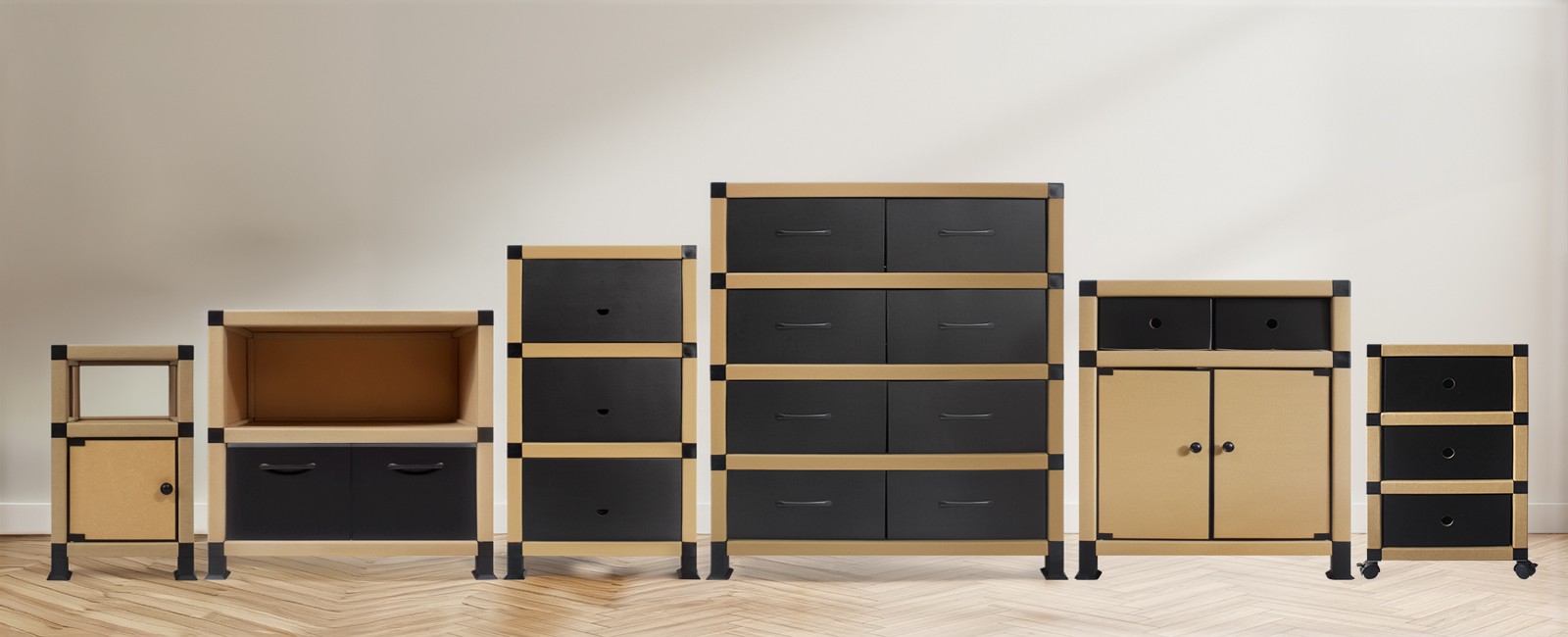
Assembling furniture has long been associated with frustration: missing screws, confusing instruction manuals, and the inevitable search for a screwdriver that always seems to disappear when you need it most. For anyone who has struggled to put together a traditional wardrobe, the idea of a storage unit that requires absolutely no tools sounds almost too good to be true. Yet that is exactly what a tool-free assembly paper wardrobe delivers. Built from high-strength paper tubes and reinforced panels, these wardrobes snap together using a system of multi-prong polypropylene connectors, creating a functional storage solution that is both cleverly engineered and surprisingly practical.
The defining feature of this type of wardrobe is that it can be assembled entirely by hand, without any hardware, tools, or special skills. The construction relies on three basic components: high-strength paper tubes that form the vertical and horizontal frame, reinforced paper panels that serve as shelves and dividers, and multi-way PP connectors that lock everything together. The connectors come in three-way, four-way, and five-way configurations, allowing the tubes to be joined at corners, along edges, and at intersection points simply by pressing them into place.
This design eliminates several common pain points of furniture assembly. There are no tiny screws to fumble with, no Allen wrenches to lose, and no risk of stripping a thread halfway through the build. Most people can put together a full-size unit in roughly 15 to 30 minutes by following a visual step-by-step guide. The process is intuitive enough that first-time users can complete it without assistance, and it is just as easy to take apart when the time comes to move or rearrange a room.
Despite being made primarily from paper, these wardrobes are engineered to carry meaningful loads. The paper tubes are manufactured from thick kraft paper that has been compressed and treated for rigidity, giving them surprising structural strength. When combined with the connector system, the resulting grid frame distributes weight evenly across the vertical supports rather than concentrating it at single points.
The reinforced paper panels used for shelves and backing add further stability. These panels are denser than standard cardboard and are designed to resist bending under distributed weight. Together, the tubes and panels create a modular paper closet system that can hold everyday clothing, folded garments, shoes, and accessories without sagging or warping under normal use conditions.
One of the most noticeable advantages of a paper wardrobe is how light it is compared with traditional furniture. A typical paper-based wardrobe weighs roughly 20 to 30 percent of what a comparable wooden or metal unit weighs. This makes it easy for one person to carry the disassembled components, reposition the assembled unit across a room, or pack it up for a move.
The flat-pack nature of the design further enhances portability. When disassembled, the tubes, panels, and connectors all pack neatly into a single carton. This reduces shipping volume significantly compared with pre-assembled furniture, and it means the entire wardrobe can be transported in a standard car, carried up narrow stairwells, or stored in a closet when not in use.
Sustainability is a central feature of paper-based furniture. The primary materials—kraft paper tubes and reinforced paper panels—are derived from renewable sources and can be recycled at the end of the product's life. Unlike plastic storage units that can persist in the environment for hundreds of years, or wooden cabinets that require harvesting timber, a paper wardrobe for bedroom use follows a more circular path: paper is formed into furniture, and when the furniture reaches the end of its useful life, the paper components can be recycled back into new paper products.
The manufacturing process also tends to have a lower energy footprint than the production of solid wood or metal furniture. Paper processing uses less heavy machinery and generates fewer emissions per unit, making these wardrobes a choice that aligns with a lower-carbon lifestyle.
A common concern about paper furniture is how it handles moisture. Quality paper wardrobes address this through a special surface coating applied to the paper tubes and panels. This coating creates a water- and stain-resistant barrier that helps protect against everyday spills, splashes, and ambient humidity. It allows the surface to be wiped clean with a dry or slightly damp cloth without causing the paper to warp or degrade.
Additionally, the base of the wardrobe typically includes plastic foot covers that lift the paper tubes slightly off the floor. This small detail plays an important role in preventing ground moisture from wicking up into the vertical supports, which is especially useful in basements, ground-floor rooms, or climates with higher humidity. For best results, indoor humidity should be kept at reasonable levels, and any spills should be blotted promptly.
Tool-free paper wardrobes are available in a range of sizes and layouts to suit different storage needs. Compact models offer shelving and hanging space suitable for a single person or a small bedroom, while larger units provide full-height storage with multiple compartments, hanging rods, and drawer options. Some designs combine open shelves for folded items with enclosed sections for hanging garments.
The modular nature of the tube-and-connector system also means that storage layouts can be adjusted. Shelves can be placed at different heights, hanging rods can be positioned according to garment length, and additional units can be added later if more storage is needed. This flexibility makes the wardrobes well suited to changing needs, whether that means adapting to a new apartment or reorganizing a growing wardrobe.
The combination of tool-free assembly, light weight, and portability makes these wardrobes particularly well suited to several groups of people. Renters who move frequently appreciate being able to take their furniture with them rather than abandoning it at the end of a lease. Students living in dorms or shared housing value the compact footprint and the ability to set up and take down the unit quickly.
They also work well in guest rooms that double as home offices or hobby spaces, since the wardrobe can be assembled when visitors arrive and stored flat when the room is needed for other purposes. And for anyone interested in reducing their environmental impact, the recyclable materials and lower manufacturing footprint make paper furniture a meaningful alternative to conventional storage options.
Keeping a tool-free paper wardrobe in good condition is straightforward. The surface should be cleaned with a dry or lightly dampened cloth, and harsh cleaning chemicals should be avoided. It is also a good idea to respect the recommended load limits for shelves and hanging areas to prevent unnecessary stress on the structure.
Under typical indoor conditions with controlled humidity, a well-maintained paper wardrobe can provide several years of reliable service. The exact lifespan depends on factors such as frequency of use, how carefully it is moved, and the humidity level of the environment. For light-use storage, clothing organization, and flexible-space applications, it offers a practical and cost-effective solution.
A tool-free assembly paper wardrobe brings together convenience, sustainability, and practicality in a single piece of furniture. It solves the long-standing problem of complicated furniture assembly while offering a lightweight, portable, and eco-friendly storage solution. Whether you are furnishing a rental apartment, outfitting a dorm room, creating a flexible guest space, or simply looking for a greener alternative to traditional storage, the features of this type of wardrobe make it worth considering. As more people seek furniture that fits their mobile lifestyles and environmental values, paper-based storage solutions continue to gain traction as a smart and sensible choice.
