
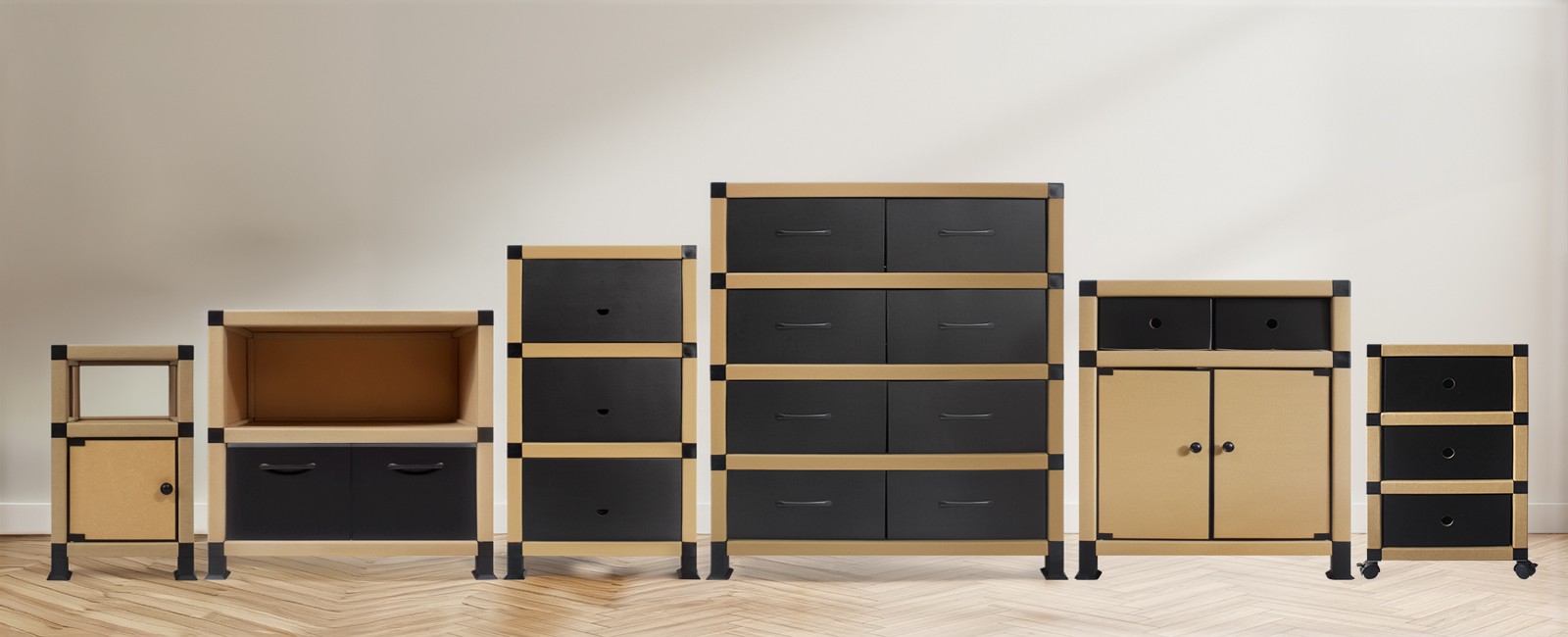
Offices generate a significant amount of furniture waste each year. When companies renovate, relocate, or downsize, conventional desks, cabinets, and shelves often end up in landfills because they cannot be easily disassembled or recycled. Choosing sustainable office furniture is one of the most practical steps a business can take to reduce its environmental footprint while creating a healthier, more adaptable workspace.
Recyclable furniture is designed so that its materials can be separated, repurposed, or returned to the recycling stream at the end of its useful life. Unlike traditional furniture that combines glued composites, mixed metals, and non-separable plastics, recyclable options prioritize single-material construction, mechanical fasteners, and modular components that come apart without specialized tools.
Several design characteristics determine whether a piece of office furniture can genuinely be called recyclable rather than simply labeled with a green marketing claim:
Paper-based furniture is one of the most recyclable categories available. Made from high-strength kraft paper tubes, reinforced paper panels, and polypropylene connectors, these products use renewable, biodegradable materials that can return to the recycling stream after their service life. Unlike plastic or mixed-material furniture, paper furniture is predominantly a single-material product, which simplifies end-of-life processing.
Companies such as MINHOU UNIMAX have developed patented connector systems and water-resistant surface treatments that make paper furniture viable for real office use. Their products use tool-free assembly with multi-prong PP connectors, allowing workers to put together storage cabinets, bookcases, and side tables without screws or adhesives. This design philosophy means every piece can be disassembled and the paper materials can be recycled when no longer needed.
Wood furniture certified by the Forest Stewardship Council (FSC) comes from responsibly managed forests. While wood is a renewable resource, the recyclability of wooden office furniture depends heavily on how it is constructed. Desks and shelves joined with screws and dowels are more recyclable than those assembled with permanent adhesives. At end of life, untreated solid wood can be chipped and composted, while engineered boards with formaldehyde-based resins are more difficult to process.
Aluminum and steel are highly recyclable and can be reprocessed indefinitely without losing structural properties. Office furniture made from recycled aluminum, such as stacking tables and frame systems, typically contains a high percentage of post-consumer recycled content. Powder-coated metal components, which do not release solvents during application, are also easier to recycle than solvent-painted alternatives because the coating can be stripped during reprocessing.
Some manufacturers now use post-consumer recycled PET from plastic bottles to create chair shells, storage bins, and acoustic panels. Bioplastics derived from plant starch or corn biomass offer another alternative, though their recyclability depends on local facilities. For office use, recycled-plastic components work best when they are not permanently bonded to other materials, so they can be separated and processed at end of life.
Among the recyclable options available, paper-based furniture stands out for offices that need flexibility, affordability, and a low environmental impact. These products weigh significantly less than traditional furniture, ship flat to reduce transportation emissions, and assemble without tools using connector systems.
For office environments, several product categories from MINHOU UNIMAX are particularly relevant:
Storage cabinets and organizers. A cardboard storage unit can serve as an office filing cabinet, supply organizer, or departmental storage shelf. Products like the multi-compartment living-room cabinet (Model UM24054, measuring 80 x 30.5 x H95 cm) provide enough divided space for files, stationery, and office supplies while remaining lightweight enough to reposition as layout needs change. Cabinets that combine doors with open shelving, such as Model UM24060, keep frequently used items accessible while protecting stored documents from dust.
Bookcases and shelving. A five-tier paper bookcase (Model UM24027, 76 x 29 x H176 cm) uses vertical space efficiently, making it suitable for offices where floor area is limited. These units hold books, binders, reference materials, and decorative items. Because they assemble and disassemble without tools, they can be moved between rooms or taken along during office relocations.
Mobile storage organizers. Wheeled paper organizers, such as Model UM24035 (65 x 37 x H76.5 cm), allow staff to move supplies between workstations, meeting rooms, or storage areas. Locking casters keep the unit stable when parked. These are especially useful in shared or hot-desking environments where personal storage needs to be portable.
Side tables and end tables. Narrow paper side tables serve as compact surfaces for printers, plants, or meeting-room supplies. Models like UM24004 (30.5 x 30.5 x H84 cm) include multiple storage tiers and a drawer, combining surface area with organization in a small footprint.
Children's desks and play tables. For offices with childcare areas or family-friendly policies, paper desk-and-seat sets and play tables provide a safe, lightweight, and recyclable option. The game table set (Model UM24050, 60 x 60 x H43.5 cm with four seats) is easy to move and store when not in use.
Not all products marketed as eco-friendly deliver on that promise. When evaluating recyclable furniture for your office, consider the following criteria:
Different office environments have different needs. Here is how recyclable furniture can serve each scenario:
Startups and co-working spaces. These environments change rapidly as teams scale. Flat-pack paper cabinets and organizers can be assembled in minutes, reconfigured when teams restructure, and recycled when no longer needed. The low upfront cost and tool-free assembly make them ideal for spaces that need to remain adaptable.
Corporate offices. Larger organizations can use recyclable furniture for auxiliary storage, meeting-room side tables, and departmental organizers. Paper bookcases and storage cabinets work well alongside existing wood or metal desks, providing additional storage without the environmental cost of new composite furniture.
Temporary and pop-up offices. Project offices, exhibition booths, and event spaces benefit from furniture that is lightweight, easy to transport, and fully recyclable after the event. Paper furniture flat-packs into cartons for shipping and can be recycled locally when the project ends, eliminating the cost and waste of returning traditional furniture.
Home offices and remote work. Remote workers who need a functional setup without committing to heavy permanent furniture can use paper side tables as printer stands, paper organizers for filing, and paper bookcases for reference materials. These items are easy to assemble, relocate, or store when not in use.
Maximizing the service life of any furniture is itself a sustainable practice, because the longest-lasting product is the one that does not need to be replaced. Here are practical steps:
The best recyclable furniture for office use depends on your specific needs: the type of work being done, the available space, the expected duration of use, and the budget. Paper-based furniture excels in scenarios that demand flexibility, low weight, and genuine recyclability. Wood certified by FSC offers durability and a warm aesthetic for long-term installations. Recycled metal provides strength and indefinite recyclability for high-use items. Recycled plastics work well for specific components like chair shells and storage bins.
The most effective approach is often a mix: invest in durable, FSC-certified wood or recycled-metal desks for primary workstations, and use paper-based storage cabinets, bookcases, and organizers for supplementary storage and flexible areas. This strategy balances longevity, cost, and environmental responsibility.
When evaluating suppliers, ask for material composition details, load test reports, certifications, and end-of-life recycling guidance. A manufacturer that can provide this information transparently is one that has genuinely designed its products for recyclability rather than simply applying a green label. MINHOU UNIMAX, for example, maintains BSCI and FSC membership and provides test reports covering formaldehyde, load capacity, and material safety for its paper furniture line.
Ultimately, choosing recyclable office furniture is not just about buying a product with an eco-friendly label. It is about selecting furniture that is designed to be assembled, used, disassembled, and recycled with minimal waste at every stage of its lifecycle. By prioritizing material separability, mechanical assembly, certified sourcing, and practical durability, businesses can build workspaces that are both functional and environmentally responsible.
