
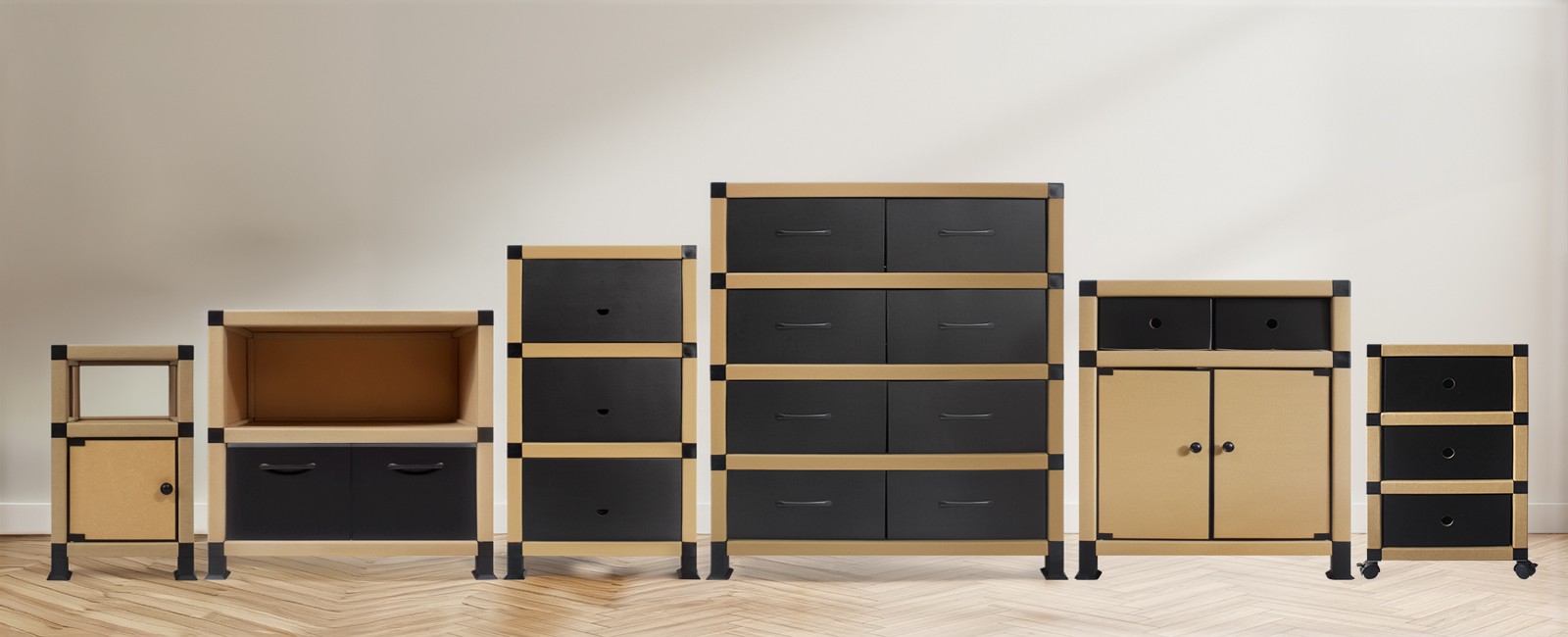
For anyone who has ever stared at a pile of wooden boards, a bag of screws, and an Allen wrench at 10 PM, the appeal of no-tool assembly furniture is immediately understandable. Traditional furniture often comes with a steep learning curve and hours of frustrating work. In contrast, tool-free designs promise a faster, simpler path to a furnished space. But the advantages go well beyond just skipping the screwdriver.
No-tool assembly furniture is designed to be put together without any external tools — no screwdrivers, no hammers, no Allen keys, and no power drills. Instead, it relies on clever structural connectors, interlocking joints, friction-fit systems, and snap-on components that hold the piece together securely.
Advances in connector technology have made this approach far more robust than early "snap-together" designs. Modern systems, such as multi-prong polypropylene connectors paired with reinforced panels and high-strength paper tubes, distribute weight evenly and create stable, load-bearing structures. The result is furniture that assembles by hand yet performs reliably in daily use.
The most obvious benefit is speed. A typical conventional flat-pack bookcase or wardrobe often takes the better part of an afternoon to assemble — and that's if you follow the instructions correctly the first time. Missing parts, confusing diagrams, and stripped screw holes can stretch the process even longer.
With no-tool assembly furniture, most pieces come together far more quickly. The connector system is intuitive: you align the tubes, slot the panels, and press the connectors into place. There's no risk of over-tightening screws, no need to hunt for the right sized wrench, and no danger of damaging pre-drilled holes. For families, renters, and anyone short on time, this is a significant time-saver.
Conventional furniture is often treated as semi-permanent. Once you assemble a wooden bookshelf, moving it usually means either hauling a heavy, fully-built unit or disassembling it and risking stripped screws and damaged dowels. Many people simply leave furniture behind when they move.
Tool-free furniture is designed to be taken apart and reassembled repeatedly. The connectors are made to handle multiple assembly cycles without wearing out. This makes it ideal for:
This is where the difference really adds up. Traditional wood and particleboard furniture has a substantial environmental footprint. Deforestation, high-energy manufacturing processes, chemical binders, and the sheer weight of the material all contribute. When furniture reaches the end of its life, much of it ends up in landfills because composite materials are difficult to recycle.
Eco-friendly furniture made from paper and cardboard takes a different approach. It uses renewable kraft paper as its primary material, requires less energy to manufacture, and is fully recyclable at the end of its service life. Leading manufacturers like MINHOU UNIMAX complement these materials with water- and stain-resistant surface treatments, so the furniture can handle real-world use while remaining kind to the planet.
For brands and retailers, this sustainability story resonates strongly with eco-conscious consumers. It also opens up opportunities in markets with strict environmental regulations or green-building requirements.
The weight difference between conventional and tool-free paper furniture is dramatic. Paper-based furniture typically weighs only 20% to 30% as much as comparable wooden furniture. When combined with flat pack furniture design, the shipping savings are significant — more units fit in each container, and freight costs per piece drop substantially.
For retailers and e-commerce brands, these savings flow directly to the bottom line. They also make it more feasible to offer free or low-cost shipping, which is a major driver of online furniture sales. And because the components are lighter and packed flat, last-mile delivery becomes simpler and less expensive as well.
No-tool paper furniture isn't limited to one room or one use. The modular nature of connector-based designs means the same system can be configured into bedside tables, wardrobes, sofa side tables, living room cabinets, bookshelves, home organizers, children's desks, and even pet houses.
This versatility is especially valuable for:
Modern paper-furniture systems use reinforced panels and high-strength paper tubes paired with engineered connectors. Quality manufacturers test their products for load capacity — for example, some bookshelves can support a total load of 50 kg, and seating structures can handle an adult weighing up to 80 kg. As with any furniture, it's important to follow the manufacturer's load guidelines and choose the right piece for the intended use.
Under typical indoor conditions, paper furniture commonly lasts 1 to 5 years, and with proper care it can last longer. Water- and stain-resistant surface treatments help protect against everyday spills and moisture. To maximize lifespan, keep it away from direct floor moisture, control indoor humidity, and avoid exceeding weight limits.
Yes. Quality no-tool systems use hand-pressed connectors and interlocking panels. You simply align the pieces and push or snap the connectors into place. The entire process requires nothing more than your hands and a clear workspace.
If you value your time, move frequently, care about sustainability, or simply want furniture that fits a flexible lifestyle, no-tool assembly furniture offers compelling advantages over conventional options. It won't replace heavy-duty, heirloom-quality pieces — but for storage, display, children's spaces, rental homes, offices, and anywhere you want fast setup and easy reconfiguration, it's a practical and forward-thinking choice.
As manufacturing technology and connector design continue to improve, the gap in strength and durability between paper-based tool-free furniture and traditional furniture keeps narrowing. For many people and many spaces, the question is no longer whether paper furniture can work — it's why they would spend a weekend wrestling with an Allen wrench when there's a simpler, greener, faster alternative available.
Explore No-Tool Paper Furniture Collection
Discover bedside tables, wardrobes, bookshelves, organizers, and more — all tool-free, eco-friendly, and built for modern living.
