
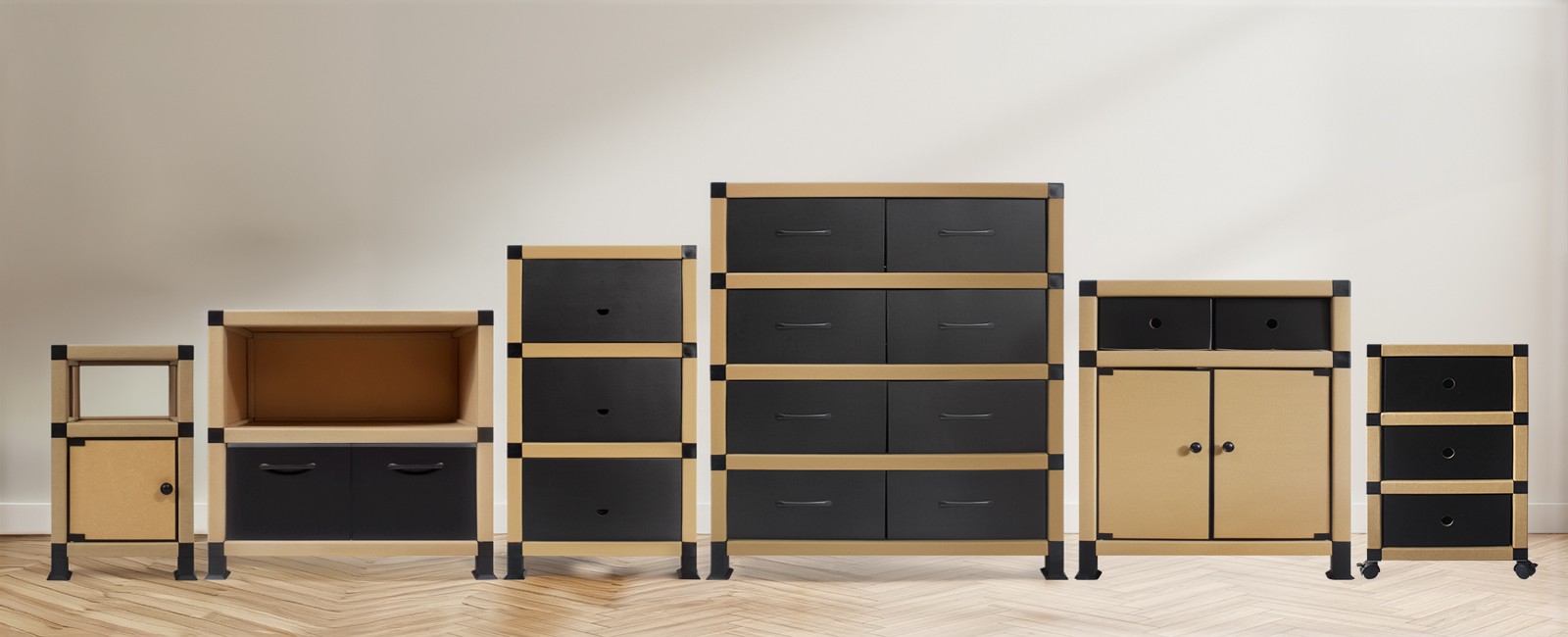
When people first hear the term "paper furniture," they often picture something flimsy — a temporary craft project rather than a functional piece for daily living. The reality is quite different. A paper furniture manufacturer specializes in designing and producing furniture made from high-strength kraft paper tubes, reinforced paper panels, and precision-engineered connectors. The result is furniture that is lightweight, surprisingly durable, and genuinely eco-friendly.
A paper furniture manufacturer is more than a simple assembly shop. Companies like MINHOU UNIMAX, which has been producing home furnishings since 2009, handle the entire process — from raw material selection and structural design to precision cutting, surface treatment, quality testing, and export packaging. Unlike traditional furniture factories that work with wood, metal, or particleboard, these manufacturers have developed specialized expertise in transforming kraft paper into load-bearing structures.
The core of their work involves three key components: high-strength paper tubes that form the structural frame, reinforced paper panels that create surfaces and shelves, and patented multi-prong polypropylene (PP) connectors that hold everything together. Mastering how these three elements interact — and ensuring the finished product is safe, stable, and long-lasting — is what sets a professional cardboard furniture manufacturer apart from a hobby workshop.
The manufacturing journey begins with raw materials. The primary input is high-quality kraft paper delivered in large jumbo rolls. The weight, fiber length, and tear resistance of this paper are carefully specified because they directly determine the final strength of the furniture. Manufacturers source kraft paper with consistent thickness and moisture content to ensure predictable performance during the winding process.
In addition to paper, manufacturers select food-grade or industrial-grade water-based adhesives for lamination, reinforced PP plastic for connector molding, and protective plastic foot caps. Each material is chosen with both structural performance and environmental responsibility in mind — a hallmark of eco-friendly furniture production.
Paper tubes are the backbone of paper furniture, and their production is a precise, automated process. Here is how it works:
The jumbo kraft paper rolls are first loaded onto a slitter-rewinder machine, which cuts them into narrower strips called "plies." The width of each ply is calculated based on the desired tube diameter and the spiral winding angle. This step must be extremely precise — even a small variation in ply width can affect the tube's roundness and strength.
The adhesive-coated paper plies are then fed into a spiral winding machine, where they are wound at a diagonal angle around a rotating steel mandrel. The mandrel's diameter determines the inner diameter of the finished tube. As each ply spirals around the mandrel, it overlaps with the previous layer, creating a continuous helical seam. Multiple plies are wound on top of each other, each bonded with water-based adhesive, building up wall thickness and strength. For furniture-grade tubes, several layers are typically used to achieve the required load-bearing capacity.
Once the continuous tube exits the winding machine, a high-speed rotary cutting system slices it into precise lengths. The cutting speed is synchronized with the winding speed to ensure clean, square cuts without slowing down production. These cut tubes are the raw structural components that will later become table legs, shelf supports, wardrobe frames, and more.
While tubes form the frame, paper furniture also needs flat surfaces — tabletops, drawer fronts, shelf boards, and cabinet panels. These are made from reinforced paper panels, which are produced by laminating multiple layers of heavy paperboard or corrugated cardboard under pressure. The lamination process uses water-based adhesives and heat pressing to create a rigid, flat, dimensionally stable panel.
After pressing, the panels are cut to exact sizes using CNC cutting equipment. Edges are carefully trimmed and sealed to prevent moisture ingress and to give a clean, finished appearance. Some panels receive additional surface treatment for enhanced water and stain resistance — a critical feature for furniture used in kitchens, bathrooms, or dining areas.
The connectors are what make paper furniture truly modular and tool-free to assemble. A professional paper furniture manufacturer invests heavily in connector design, often holding multiple patents for innovative joint systems. For example, some manufacturers develop three-way, four-way, and five-prong connectors made from reinforced PP plastic, each precision-molded to snap-fit snugly inside the paper tubes.
These connectors are produced using injection molding machines. Molten PP resin is injected into precision-machined steel molds under high pressure, then cooled and ejected. The molds are designed with double-groove or multi-prong geometries that distribute load across the tube walls rather than concentrating stress at a single point. This engineering is why paper tube furniture can support significant weight despite its lightweight construction.
Raw paper tubes and panels are functional but not yet ready for consumer use. The surface treatment stage is where the furniture gains its final appearance and protective properties. Depending on the product line, manufacturers may apply:
Reputable paper furniture manufacturers run a comprehensive quality control program at every stage of production. Raw materials are inspected upon arrival for weight, thickness, and moisture content. Intermediate components — tubes, panels, connectors — undergo dimensional checks and sample load testing.
Finished furniture assemblies are tested for structural stability, load capacity, and formaldehyde emissions. Some manufacturers also commission third-party test reports covering POP/PCP, cadmium, and phthalates to ensure compliance with international safety standards. Certifications such as BSCI membership and FSC sourcing are additional indicators of a manufacturer's commitment to quality and responsible production.
One of the practical advantages of paper furniture is how efficiently it ships. Because all components — tubes, panels, and connectors — can be disassembled, they pack flat into standard export cartons. This flat-pack approach dramatically reduces shipping volume compared to pre-assembled furniture, which lowers freight costs and the carbon footprint of transportation.
Each carton contains a complete set of components, along with printed assembly instructions and any necessary accessories. The packaging itself is designed to protect delicate surfaces during transit while remaining recyclable, staying true to the sustainable ethos of the product.
The manufacturing process concludes when the customer assembles the furniture. Thanks to the modular connector system, no tools are required. The paper tubes simply push-fit into the multi-prong connectors, and panels slot into pre-engineered positions. This tool-free assembly is one of the most appreciated features for renters, students, and anyone who frequently rearranges or moves.
When assembled correctly, paper furniture can support meaningful loads — a bookshelf may carry up to 50 kg of books, and certain seating structures can support an adult. The typical service life ranges from one to five years depending on usage and environment, and with proper care — controlling indoor humidity, respecting load limits, and keeping the furniture away from direct floor moisture — it can last even longer.
Not all paper furniture is created equal. A professional manufacturer brings years of material science expertise, patented connector technology, rigorous quality testing, and a deep product catalog to the table. Whether you are a retailer looking for a wholesale supplier, a brand seeking private-label production, or a buyer sourcing for rental properties, offices, or educational spaces, working with an experienced paper furniture manufacturer ensures you get products that are safe, consistent, and built to last.
As consumer demand for sustainable, lightweight, and flexible furniture continues to grow, the role of the paper furniture manufacturer becomes increasingly important. What started as a niche concept is now a viable alternative to traditional furniture — proving that with smart engineering, even paper can hold its own.
If you are interested in exploring paper furniture for your business or project, look for a manufacturer with a proven track record, transparent quality processes, and a product range that matches your needs. The right partner can help you bring sustainable, stylish, and practical furniture solutions to your customers.
