
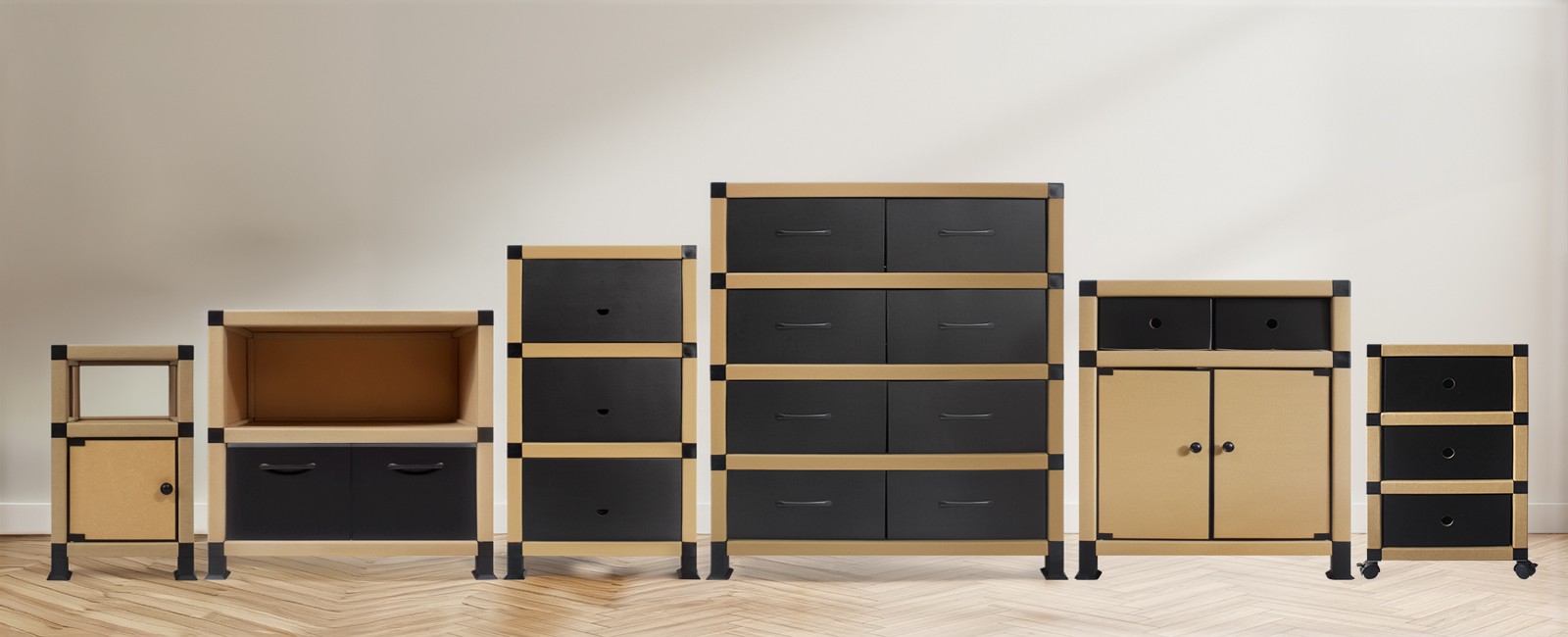
How to spot genuinely sustainable furniture, avoid greenwashing, and choose pieces that are as strong as they are responsible
Walk into any furniture store today and you will see the word "eco-friendly" plastered across labels, hangtags, and marketing brochures. But what does it actually mean? Too often, the term is applied loosely to anything containing a percentage of recycled material or finished with a plant-based stain, while the broader environmental footprint of the product goes unexamined.
Genuine eco friendly furniture is not a surface claim. It is a commitment that spans the entire lifecycle of a product, from the forest or field where raw materials originate, through the factory floor where those materials are shaped, all the way to the moment the furniture is eventually retired and either recycled or sent to a landfill. Understanding this lifecycle is the key to making purchasing decisions that benefit both your home and the planet.
Before diving into specific materials and products, it helps to have a framework. When evaluating whether a piece of furniture is truly eco-friendly, look for these five pillars:
Few products on the market satisfy all five pillars simultaneously. Reclaimed wood furniture scores well on sourcing and durability but is heavy to ship and difficult to recycle. Bamboo grows quickly but often requires chemical adhesives for lamination. The most exciting developments in sustainable furniture today come from materials that address all five pillars at once, and one of the most promising is also one of the most unexpected: kraft paper.
If you have ever lifted a 25-kilogram bag of cement or flour, you have already trusted kraft paper with heavy loads. The kraft pulping process produces long, strong cellulose fibers that outperform ordinary paper in both tensile strength and tear resistance. When these fibers are wound tightly into cylindrical tubes under high pressure, the resulting structures distribute weight through geometric efficiency rather than sheer material mass.
This is the engineering principle behind modern kraft paper furniture. High-strength paper tubes serve as the primary load-bearing elements, while patented multi-prong connectors lock them into rigid, interlocking frameworks. The result is furniture that achieves stability comparable to traditional wood, at a fraction of the weight.
Minhou Unimax has been refining this approach since 2009. The company holds patents on 3-prong, 4-prong, and 5-prong connector designs, along with double-groove three-way connectors and paper square tube joints that create structural load-bearing breakthroughs through mechanical optimization rather than bulk material.
Strength by the Numbers
An adult weighing up to 80 kg can stand on a Unimax paper furniture piece without causing deformation. A fully assembled bookshelf carries a total load of up to 50 kg. These figures are not estimates; they are verified through independent loading capacity testing. The furniture also weighs only 20 to 30 percent of its traditional counterpart, making it dramatically easier to move and ship.
This is the question every potential buyer asks, and it deserves a straightforward answer. Through special surface treatments, modern waterproof paper furniture achieves more than five minutes of water and stain resistance. In practical terms, a spilled drink or a splashed sink can be wiped away with a damp cloth before any damage occurs.
Daily cleaning requires nothing more than a gentle wipe. No special polishes, no refinishing, no anxiety. The water-resistant coating is not about making the furniture immortal, but about making it practical for the realities of everyday life, where coffee cups tip over and rain sometimes blows through open windows.
Sustainability means little if the furniture is difficult to use. The strongest case for paper tube furniture is that it solves real problems that traditional furniture creates.
Assembly without tools. The patented connector systems eliminate the need for screws, Allen keys, and confusing instruction manuals. Toolless assembly furniture snaps together in minutes and comes apart just as easily, making it ideal for people who move frequently, live in rental apartments, or simply dislike the frustration of flat-pack construction.
Lightweight portability. Weighing only 20 to 30 percent of conventional furniture, lightweight furniture can be carried up narrow staircases, tucked into a car trunk, and rearranged by one person without help. This changes the relationship between a person and their living space, making it easy to reconfigure rooms on a whim.
Small space optimization. For apartment dwellers, students, and anyone working with limited square footage, small space furniture with compact footprints and vertical storage is transformative. A bookcase with a 76 x 29 cm base that rises to 109.5 cm delivers substantial storage capacity without consuming precious floor area.
Renter-friendly design. Rental furniture needs to be affordable, movable, and adaptable. Paper furniture delivers on all three counts: it is cost-effective, easy to disassemble and transport between homes, and modular enough to reconfigure as living situations change.
The versatility of modular paper furniture becomes clear when you look at specific products. Each piece is designed for a distinct use case while sharing the same engineering DNA.
Paper Bookcase (UM24025)
A vertical storage unit measuring 76 x 29 x 109.5 cm. Compact footprint maximizes floor space while categorized compartments keep books, documents, craft supplies, and office materials organized in one centralized, accessible location. Total load capacity reaches 50 kg.
Paper End Table (UM24004)
A multi-functional sofa side table at 30.5 x 30.5 x 84 cm with three tiers and one drawer. Equally suited as a bedroom nightstand, living room accent table, or coffee table. Stylish modern design assembles in minutes without tools.
Paper Cat House (UM24037)
A pet-friendly design at 42.5 x 37.5 x 43 cm that accommodates most cat litter boxes. The all-in-one enclosed structure contains odors, while the top shelf provides a convenient spot for food bowls. Proves that sustainable furniture can serve every member of the household, including the feline ones.
When a manufacturer claims their furniture is eco-friendly, ask for proof. Credible certifications and test reports are the difference between a marketing slogan and a verifiable commitment. Here is what to look for and why each matters:
Minhou Unimax maintains all of the above. These are not optional extras; they are the foundation of trust between manufacturer and consumer.
What happens to your furniture when you no longer need it? For most conventional furniture, the answer is grim. Medium-density fiberboard and particleboard, held together with formaldehyde-based resins, are nearly impossible to recycle. Metal and wood composites require separation processes that most municipal facilities cannot handle. The vast majority ends up in landfills.
Paper furniture follows a different trajectory. At the end of its useful life, the components can be separated by hand, and the paper tubes can be recycled into new paper products. No special equipment, no hazardous waste handling, no landfill. The material that began as a tree returns to the fiber stream and begins the cycle again, completing a closed-loop resource journey from tree to product to recyclable material.
Q: Is paper furniture strong enough for daily household use?
A: Yes. Patented connector technology and high-strength kraft paper tubes allow the furniture to support an adult weighing up to 80 kg standing on a piece without deformation, and a bookshelf load capacity of up to 50 kg. These figures are verified through independent loading capacity testing.
Q: How do I clean paper furniture?
A: Daily cleaning requires only a gentle wipe with a damp cloth. The special surface treatment provides more than five minutes of water and stain resistance, giving you ample time to clean up spills before any damage occurs.
Q: Can paper furniture be recycled?
A: Absolutely. At the end of its service life, paper furniture components can be separated and the paper tubes recycled into new paper products, completing a fully circular resource cycle.
Q: Is paper furniture suitable for renters?
A: It is ideal for renters. The lightweight, modular, toolless-assembly design makes it easy to assemble, disassemble, and transport between homes, while the affordable price point suits transitional living situations.
Q: What certifications should I look for when buying eco-friendly furniture?
A: Look for FSC certification for responsible material sourcing, BSCI membership for ethical manufacturing, and test reports covering formaldehyde emissions, loading capacity, POP-PCP, cadmium, and phthalates. These provide verified assurance of environmental and safety standards.
Choosing eco-friendly furniture does not mean compromising on strength, style, or practicality. It means looking beyond the label and asking the right questions: Where did the materials come from? How was it made? Can it handle daily life? And what happens to it when you are done?
Minhou Unimax has been answering those questions since 2009, with patented engineering, verified certifications, and a product range that spans bookcases, end tables, bedside tables, and pet houses. Explore the full collection and discover how paper furniture can transform your living space at https://www.fz-unimax.com/.
