
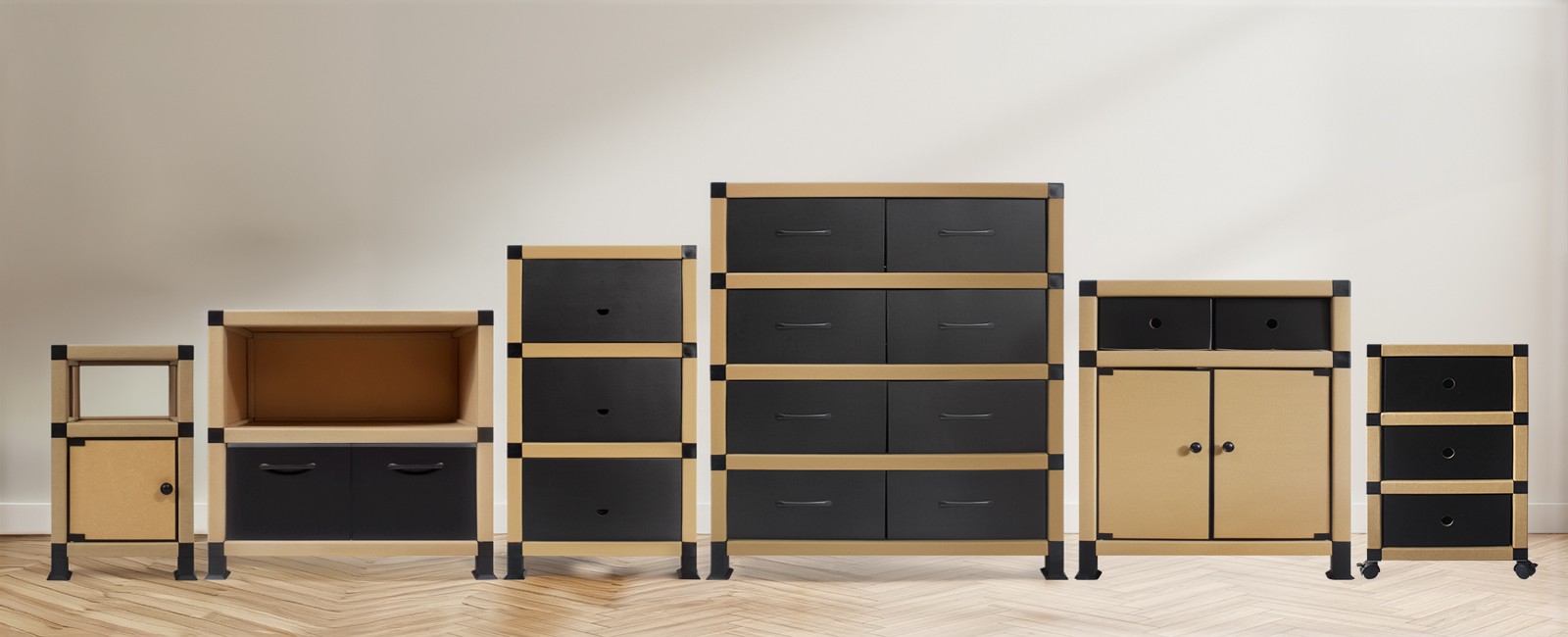
Green home decor goes far beyond adding a potted fern or choosing a soothing earth-tone palette. It is a holistic approach to furnishing and styling living spaces with materials and products that minimize environmental harm throughout their entire life cycle, from production to disposal. That means asking where a piece of furniture comes from, what it is made of, how much energy went into manufacturing it, how long it will last, and what happens to it when it is no longer needed.
Traditional furniture relies heavily on harvested timber, metal mining, and petroleum-based plastics. These materials require energy-intensive processing and often end up in landfills after a single use. Eco-friendly furniture, by contrast, prioritizes renewable, recyclable, and biodegradable materials that can return to the earth without leaving toxic residues behind.
This is where an unexpected material enters the conversation: paper.
When most people hear "paper furniture," they picture something flimsy — a cardboard box that buckles under the weight of a coffee mug. That perception could not be further from the reality of modern engineered paper furniture.
Companies like MINHOU UNIMAX, a manufacturer based in Fuzhou, China, have spent over a decade refining the science of turning kraft paper into sturdy, functional household furniture. Since 2009, the company has developed patented structures that combine three core components: high-strength paper tubes, reinforced paper panels, and multi-prong polypropylene (PP) connectors. Together, these elements create furniture that is lightweight yet surprisingly strong.
Did you know? According to the manufacturer, their paper furniture weighs approximately 20% to 30% as much as traditional furniture made from wood or metal. Selected structures are designed to support an adult weighing up to 80 kg, and a single bookshelf can carry a total load of 50 kg. These are manufacturer-stated figures, but they illustrate how far paper engineering has come.
The secret lies in the structural design. High-strength kraft paper is tightly rolled into tubes that distribute weight along their length, much like how architectural columns carry loads in buildings. Reinforced panels add rigidity to flat surfaces, while patented three-way and multi-prong connector systems improve load distribution and allow the furniture to be assembled and disassembled repeatedly without losing structural integrity.
One of the most common questions about paper furniture is whether it can genuinely hold up in daily use. The answer lies in the engineering details.
The kraft paper used in these products receives special treatment for water and stain resistance, addressing one of the main concerns people have about paper-based materials in a home setting. Nano-coating technology adds an additional protective layer, making surfaces easier to clean and more resistant to everyday spills. The manufacturer recommends controlling indoor humidity, keeping furniture away from direct floor-level moisture, respecting published load limits, and occasionally retightening joints to maintain performance over time.
In terms of service life, the company notes that paper furniture typically lasts one to five years depending on materials, construction, use, and environment, and may exceed five years under suitable conditions. This positions it well for light-use, storage, decorative, transitional, and flexible-space applications rather than as a replacement for permanent heavy-load core furniture.
The idea of sustainable furniture only works if the products fit naturally into real homes. MINHOU UNIMAX offers a catalog spanning eight product categories with 33 independently linked product pages, covering nearly every room in a typical household:
What ties all these products together is a commitment to modular furniture design. Each item uses a tool-free assembly system with PP connectors, meaning no screwdrivers, no Allen wrenches, and no frustration. The pieces simply slot together and can be taken apart just as easily when it is time to move or rearrange.
Not everyone owns a home. In fact, a growing portion of the global population lives in rental apartments, student dormitories, or temporary housing. For these individuals, traditional furniture presents a series of headaches: it is heavy, difficult to move, expensive to transport, and often impossible to fit through narrow doorways or up tight stairwells.
Paper furniture solves these problems at every stage. Products ship flat-packed, with paper tubes, reinforced panels, and connectors packed separately in cartons. This dramatically reduces shipping volume and makes transportation more efficient, whether you are moving across town or across borders. Once unpacked, the furniture assembles in minutes without tools and can be disassembled just as quickly when your lease ends or your needs change.
Why flat-pack matters: Traditional furniture shipping fills truck beds and shipping containers with a mix of air and bulky items. Flat pack furniture compresses everything into compact cartons, which means fewer trucks on the road, lower shipping emissions, and reduced logistics costs. For exporters, this efficiency translates into competitive pricing that makes sustainable options accessible to more households.
The lightweight furniture also appeals to anyone who has ever struggled to carry a wooden bookshelf up three flights of stairs. Weighing a fraction of conventional alternatives, these products can be repositioned by a single person, making it easy to refresh a room layout on a whim.
True sustainability is not just about using greener materials — it is about designing products that can be reused, repurposed, and eventually recycled without entering a landfill. This is the circular economy principle applied to home furnishings.
Paper furniture embodies this principle naturally. The kraft paper used in production is itself a recyclable and renewable material. When a piece of recyclable furniture reaches the end of its useful life, it can be broken down and recycled through standard paper waste streams rather than requiring specialized disposal. Compare this with composite wood furniture bonded with formaldehyde-based glues, which is notoriously difficult to recycle and often ends up as landfill waste.
The manufacturing process itself carries a lower environmental footprint. Paper-based production requires less energy than metal smelting, plastic molding, or timber milling. The materials are sourced from renewable kraft paper rather than old-growth forests, and the company holds FSC (Forest Stewardship Council) membership, indicating a commitment to responsibly sourced materials.
Certifications and quality assurance: MINHOU UNIMAX has been a member of BSCI (Business Social Compliance Initiative) and FSC for years. The company's production includes quality control from material selection and precision cutting through modular assembly. Test reports cover formaldehyde levels, load capacity, POP/PCP, cadmium, and phthalates. Buyers should request current certificates directly from the company for compliance verification.
If you are ready to incorporate paper furniture into your green home decor strategy, here are some practical ways to start:
Start with storage. Home organizers, bookcases, and storage cabinets are the easiest entry points. They do not bear heavy daily loads and are perfect for paper-based construction. A nine-cube organizer can hold books, files, toys, and decorative items while taking up minimal floor space.
Choose the right room. Paper furniture thrives in bedrooms, living rooms, home offices, and children's spaces. Avoid placing it in consistently damp areas like bathrooms or unventilated basements.
Mix and match. There is no need to replace every piece of furniture at once. Pair a paper nightstand with your existing bed frame, or use a paper storage cabinet alongside your current sofa. The neutral kraft paper and white finishes blend well with most interior styles.
Think beyond the home. Paper furniture is equally effective in pop-up shops, exhibition booths, temporary event spaces, and classroom settings. Its lightweight, flat-pack nature makes it ideal for situations where furniture needs to be transported, assembled quickly, used briefly, and then packed away.
The green home decor movement is not a passing trend. As consumers become more aware of the environmental cost of their purchasing decisions, demand for sustainable alternatives will only grow. Paper furniture represents a genuine shift in how we think about materials, design, and the life cycle of everyday objects.
MINHOU UNIMAX has spent over fifteen years proving that paper can be more than a disposable material. Through patented connector systems, water-resistant surface treatments, and precision-engineered paper tubes, the company has created a product line that bridges the gap between sustainability and everyday practicality. For homeowners, renters, students, and businesses looking to make greener choices without sacrificing function, paper furniture offers a compelling answer.
Explore the full range of eco-friendly paper furniture from MINHOU UNIMAX. From bedside tables and wardrobes to home organizers and pet houses, every product is designed to be lightweight, tool-free, and fully recyclable.
Visit www.fz-unimax.com to browse the catalog, or contact the team directly at jeff@fz-unimax.com / grace@fz-unimax.com for wholesale, OEM, and custom orders.
