
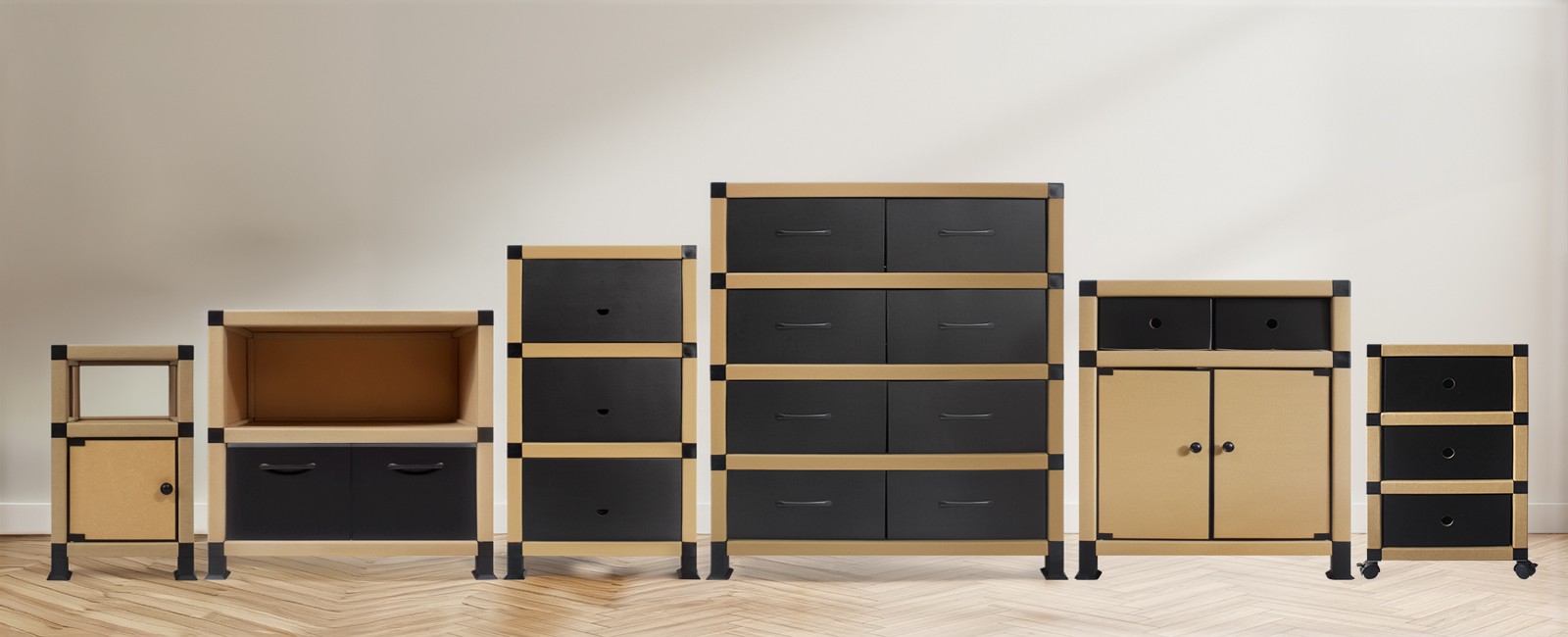
The modern office is undergoing a quiet revolution. As businesses worldwide prioritize sustainability, flexibility, and employee well-being, the furniture that fills our workspaces is being reimagined from the ground up. Enter paper furniture — an innovative category that is transforming how we think about office design, cost efficiency, and environmental responsibility.
Gone are the days when sustainable meant compromising on strength or style. Today's engineered paper furniture combines cutting-edge material science with thoughtful design, delivering solutions that are both practical and planet-friendly. For businesses looking to reduce their carbon footprint without sacrificing functionality, this emerging category offers a compelling alternative to traditional wood, metal, and plastic furnishings.
Companies are increasingly measured not just by profitability, but by their environmental impact. Sustainable office furniture has moved from a "nice-to-have" to a strategic imperative — and paper-based solutions are leading the charge.
The demand for sustainable office furniture has accelerated dramatically in recent years, driven by several converging factors. Organizations are setting ambitious carbon-reduction targets, and every purchasing decision — including furniture — is being scrutinized through a sustainability lens. At the same time, the nature of work itself is changing.
Hybrid work models, flexible desk arrangements, and dynamic team configurations mean that office layouts must adapt more frequently than ever. Heavy, built-to-last-forever furniture no longer aligns with the pace of modern business. Companies need solutions that can be reconfigured, moved, and updated without generating massive waste or expense.
This is where paper furniture shines. Made from high-strength kraft paper tubes, reinforced panels, and precision-engineered polypropylene connectors, these pieces offer remarkable strength-to-weight ratios. A typical paper-based office unit weighs roughly 20–30% of its traditional counterpart, yet selected structures can support adult-weight loads and bookshelf capacities of up to 50 kg.
Unlike furniture made from virgin wood or petroleum-based plastics, eco-friendly furniture crafted from paper uses renewable, recyclable materials. The production process consumes significantly less energy than conventional furniture manufacturing, and at the end of its useful life, paper furniture can be recycled rather than ending up in landfills. For companies pursuing BSCI or FSC-aligned procurement strategies, paper furniture represents a meaningful step forward.
One of the most practical benefits of modern paper furniture is its tool-free assembly system. Patented three-way and multi-prong connectors allow pieces to be snapped together quickly — no allen wrenches, no instruction manuals, no frustration. When office layouts change, teams can disassemble and reassemble furniture just as easily. This agility is particularly valuable for:
Moving offices is notoriously expensive and disruptive. Heavy desks, cabinets, and shelving units require professional movers, specialized equipment, and significant time. Paper furniture changes the equation entirely. Its lightweight construction means employees can move pieces without outside help, and the flat pack furniture design dramatically reduces shipping volume. For growing companies that anticipate multiple moves, the cost savings compound quickly.
modular furniture systems built from paper components offer remarkable flexibility. Cubes, shelves, and storage units can be added, removed, or rearranged as needs change. A six-cube organizer can grow into a nine-cube system as a team expands. A mobile storage unit on casters can serve as a side table one week and a document organizer the next. This modularity means companies buy only what they need, when they need it — reducing upfront costs and minimizing waste.
Modern paper furniture is nothing like the flimsy cardboard boxes you might be imagining. High-strength kraft paper receives special surface treatments for water and stain resistance, making it suitable for everyday office use. Spilled coffee? A quick wipe is all it takes. Humid environments? With proper placement away from direct floor moisture, paper furniture maintains its structural integrity. These practical treatments are what elevate paper furniture from a design concept to a viable everyday solution.
The versatility of paper furniture extends across virtually every area of the modern workplace. Here's how leading organizations are integrating these solutions:
Not all paper furniture is created equal. When evaluating suppliers, consider these critical factors:
Paper furniture typically serves for 1–5 years depending on materials, construction, and usage conditions. Under proper care — controlling indoor humidity, respecting load limits, and maintaining surface coatings — service life can exceed five years. It excels in light-use, storage, transitional, and flexible-space applications rather than heavy-load permanent core furniture.
If your organization values sustainability, flexibility, and cost efficiency, paper furniture deserves serious consideration. It's not a direct replacement for every piece of office furniture — heavy-duty workstations and ergonomic task chairs still serve specific purposes — but for storage, organization, side tables, shelving, and flexible workspace solutions, it offers a compelling value proposition.
The businesses that will benefit most are those in dynamic environments: startups, co-working spaces, creative agencies, project-based teams, and any company that frequently reconfigures its spaces. But even traditional offices can incorporate paper furniture in breakout areas, storage rooms, and temporary work zones to reduce costs and lower their environmental footprint.
As the category continues to mature — with innovations in nano-coatings, connector engineering, and structural design — paper furniture will only become more capable and more widely adopted. The question isn't whether paper furniture has a place in the modern office, but how quickly forward-thinking companies will embrace it.
Explore the full range of innovative paper furniture solutions from MINHOU UNIMAX — a manufacturer with over 15 years of experience crafting eco-friendly furnishings for homes, offices, and commercial spaces worldwide.
View the Full Catalog