
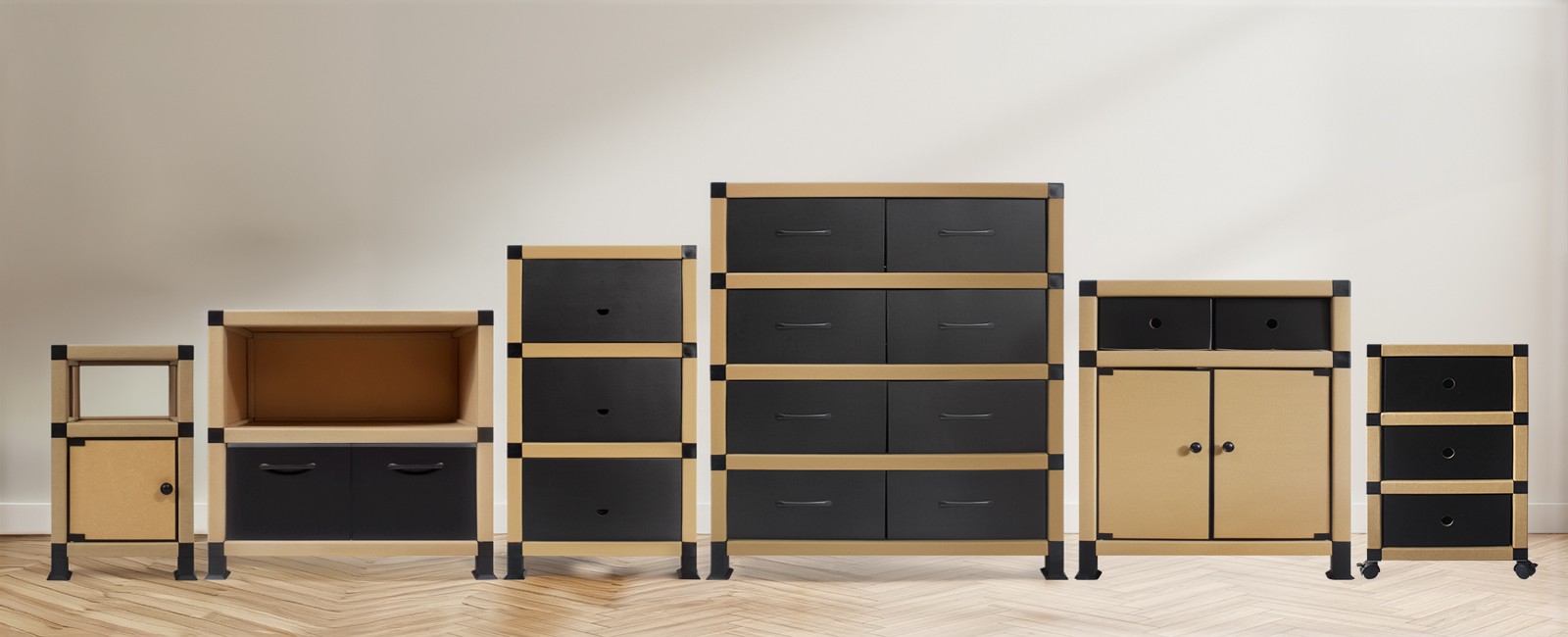
A tier refers to a single horizontal shelf level within a bookcase. When choosing between a 5-tier paper bookshelf and a 4-tier version, the difference goes beyond simply adding or removing one shelf. The number of tiers affects the total height, the vertical clearance between shelves, the overall storage volume, how the unit fits into a room, and even how weight is distributed across the structure. Paper-based bookcases add another layer to this comparison because their lightweight, modular construction behaves differently from traditional wood or metal shelving.
MINHOU UNIMAX, a manufacturer of eco-friendly paper furniture based in Fuzhou, China, produces bookcases that use high-strength kraft paper tubes, reinforced paper panels, and multi-prong polypropylene (PP) connectors. These materials allow the shelves to be assembled without tools, packed flat for shipping, and fully recycled at the end of their service life. Understanding how tier count interacts with these material properties helps buyers make a more informed decision.
The most immediate difference between a 5-tier and a 4-tier bookcase is total height. MINHOU UNIMAX's 5-tier model (UM24027) stands at 176 cm tall, while their shorter bookcase (UM24025) measures 109.5 cm in height. A 4-tier version would typically fall somewhere between these two points, often around 140 to 150 cm depending on the per-tier spacing.
| Feature | 5-Tier Bookcase (UM24027) | 4-Tier Bookcase (Typical) |
|---|---|---|
| Total Height | 176 cm | ~140 to 150 cm (estimated) |
| Footprint (Width x Depth) | 76 x 29 cm | 76 x 29 cm (same footprint) |
| Approximate Per-Tier Clearance | ~30 to 35 cm | ~32 to 37 cm |
| Best Room Type | Rooms with standard or high ceilings, study areas, living rooms | Under windows, low-ceiling spaces, children's rooms, apartments with overhead cabinets |
The 5-tier model at 176 cm approaches the height of a standard adult and works well against a full wall in a living room or home office. It takes advantage of vertical space that would otherwise remain unused. A 4-tier version, being shorter, fits more easily under windows, beneath wall-mounted air conditioning units, or in rooms where a taller structure might feel imposing. Both share the same 76 x 29 cm footprint, which means neither requires more floor space than the other, the difference is purely vertical.
A 5-tier bookcase provides roughly 25% more storage surface area than a 4-tier version of the same width and depth. That extra tier translates into space for approximately 10 to 15 additional books, a row of decorative items, or a combination of binders and storage boxes. For someone with a growing book collection or a need to separate items by category, that additional level can be the difference between an organized shelf and an overcrowded one.
However, more tiers also mean slightly less vertical clearance between each shelf if the total height is constrained. In MINHOU UNIMAX's 5-tier model, each tier offers approximately 30 to 35 cm of vertical space, which is enough for standard hardcover books, paperback novels, photo frames, and small potted plants. A 4-tier version with a similar total height would offer more room per tier, making it better suited for taller items such as oversized art books, standing photo albums, or decorative vases.
The company states that its bookshelf structures can support a total load of up to 50 kg. This load capacity applies across all tiers combined, so whether you choose four or five tiers, the total weight the structure can bear remains the same. The practical implication is that a 5-tier bookcase distributes that 50 kg across five surfaces rather than four, which can reduce the load on any single shelf and contribute to more even weight distribution.
Reaching the top tier of a 176 cm bookcase may require stretching or using a step stool for shorter individuals. The fifth tier sits well above eye level for most adults, which makes it better suited for items that are rarely accessed, such as reference books used occasionally, seasonal decorations, or display pieces. The middle tiers, roughly between 60 and 120 cm from the floor, fall within the most accessible zone and are ideal for frequently used items.
A 4-tier bookcase, being shorter, keeps more of its storage within easy reach. For elderly users, children, or anyone who prefers not to reach overhead, this can be a meaningful advantage. In children's rooms or playrooms, a lower bookcase allows kids to access their books and toys independently without climbing or asking for help. MINHOU UNIMAX also produces a dedicated children's paper desk and seating line, so a shorter paper bookcase can complement a child-friendly, eco-conscious room setup.
With paper-based furniture, stability depends on how weight is distributed and how the connectors hold the structure together. MINHOU UNIMAX uses patented multi-prong PP connectors that lock paper tubes and panels into a rigid frame. The company's design allows for repeated assembly and disassembly without degrading the structural integrity of the joints.
A taller bookcase with five tiers has a higher center of gravity, especially when the upper shelves are loaded. To maintain stability, it is advisable to place heavier items, such as large hardcover books or storage boxes, on the bottom tiers and reserve the upper shelves for lighter objects. This principle applies to both 4-tier and 5-tier configurations, but it becomes more critical as the structure grows taller.
A 4-tier bookcase, with its lower center of gravity, offers marginally better inherent stability. This can matter in households with active children or pets, where accidental bumps are more likely. Both configurations benefit from being placed against a wall and on a level surface. MINHOU UNIMAX recommends keeping paper furniture away from floor-level moisture and controlling indoor humidity to preserve the structural properties of the kraft paper tubes.
When comparing 5-tier and 4-tier bookcases made of wood or metal, the conversation usually centers on weight, cost, and appearance. Paper furniture shifts those parameters significantly. MINHOU UNIMAX states that its furniture weighs approximately 20% to 30% as much as conventional furniture of comparable size. This means that a 5-tier paper bookcase, despite being 176 cm tall, remains light enough for one person to move and reposition without assistance.
This weight difference has practical consequences for the 5-tier versus 4-tier decision. With a traditional wooden bookcase, going taller often means dealing with a much heavier and harder-to-transport unit. With a cardboard bookshelf, the added tier adds minimal weight, making the 5-tier option far more practical than it would be in other materials. Shipping is also affected: all components are flat-packed in cartons, and the shipping volume for a 5-tier paper bookcase is only marginally larger than for a 4-tier version.
The kraft paper used in these bookcases receives a surface treatment for water and stain resistance, which helps protect the shelves from spills and everyday wear. The company also holds BSCI and FSC memberships, reflecting its commitment to responsible sourcing and ethical production. At the end of its service life, which the company estimates at 1 to 5 years depending on conditions, the entire unit can be recycled rather than sent to a landfill.
Both 4-tier and 5-tier paper bookcases from MINHOU UNIMAX assemble without tools. The multi-prong connectors slot into pre-cut positions on the paper tubes and panels, and the structure locks into place as components are added. Adding a fifth tier does not require additional hardware or a more complex assembly process, it simply means repeating the same steps for one more level.
This tool-free assembly is particularly relevant for people who move frequently, such as renters, students in dormitories, or professionals relocating for work. A traditional bookcase often requires disassembly with screwdrivers or Allen wrenches, and the hardware can be lost during a move. A paper bookcase simply pulls apart into flat panels and tubes that fit back into a carton. Whether you choose four or five tiers, the disassembly and repacking process takes minutes rather than hours.
The choice between a 5-tier and a 4-tier paper bookcase depends on several factors that go beyond the number of shelves:
| Consideration | 5-Tier Bookcase | 4-Tier Bookcase |
|---|---|---|
| Storage volume | Higher (approximately 25% more shelf surface) | Moderate |
| Per-tier clearance | Standard (fits most books and decor) | Slightly larger (better for tall items) |
| Accessibility | Top tier may require reaching or a step stool | All tiers within comfortable reach for most adults |
| Stability | Good with proper weight distribution | Slightly better inherent stability (lower center of gravity) |
| Footprint | Same as 4-tier | Same as 5-tier |
| Weight of unit | Light (only marginally heavier than 4-tier) | Light |
| Ideal for | Living rooms, home offices, study areas, growing collections | Children's rooms, under-window spaces, compact apartments, shorter users |
Both the 5-tier and 4-tier paper bookcase configurations serve distinct purposes, and the right choice depends on your space, storage needs, and household composition. The 5-tier model maximizes vertical storage without increasing the floor footprint, making it ideal for rooms with adequate ceiling height and collections that continue to grow. The 4-tier alternative offers better accessibility, slightly more clearance per shelf, and a lower profile that fits under windows and in spaces where a tall unit would feel out of place.
What both options share is the set of advantages that come with paper furniture construction: tool-free assembly, lightweight portability, flat-pack shipping, recyclable materials, and a water-resistant surface treatment. Whether you need five tiers of storage in a home office or four tiers in a child's reading corner, MINHOU UNIMAX's paper bookcases offer a practical and environmentally conscious alternative to traditional shelving. The company has been manufacturing paper-based home furnishings since 2009, and its product line extends beyond bookcases to include bedside tables, wardrobes, living room cabinets, home organizers, children's desks, and pet houses, all built on the same modular, eco-friendly platform.
To explore the full range of paper bookcases and find the tier configuration that matches your space, visit the bookcase category page or browse the complete product catalog for additional storage solutions.
