
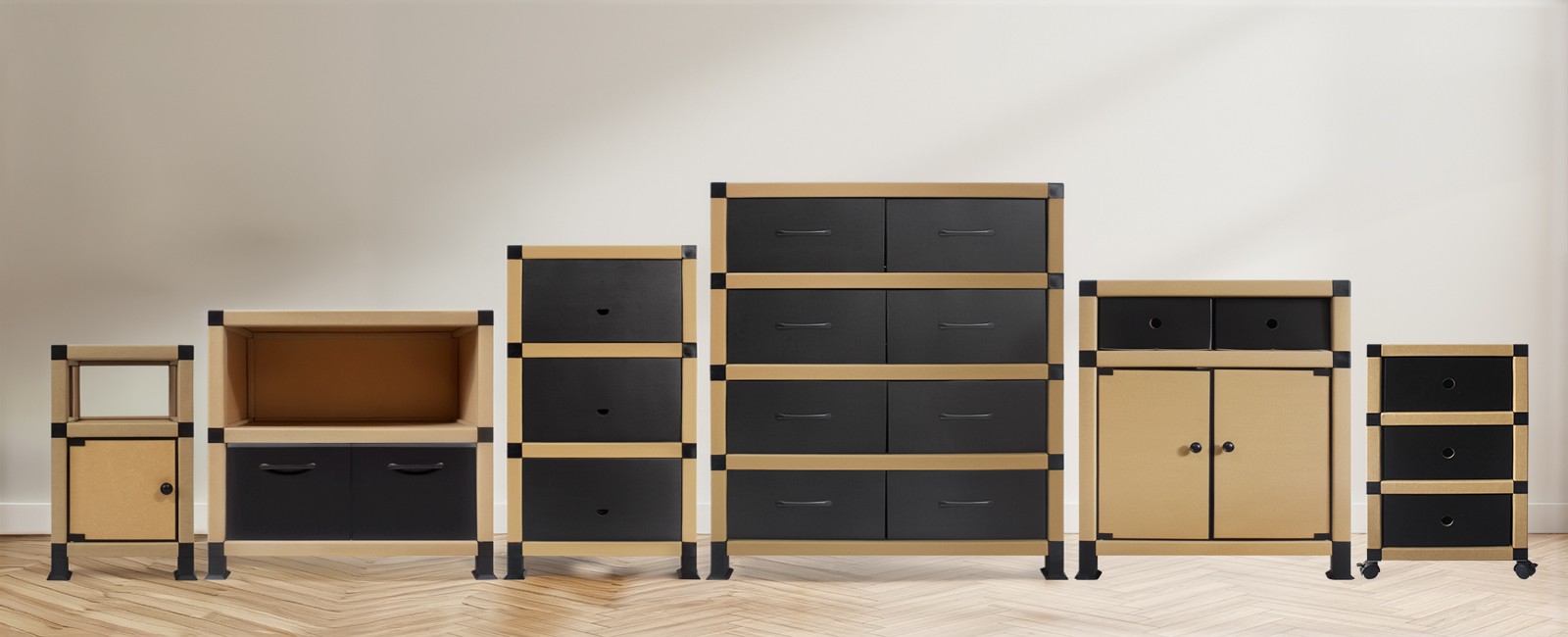
How engineered paper tubes are reshaping what we expect from sustainable furniture
When most people hear "paper furniture," they picture flimsy cardboard boxes that collapse under the slightest weight. But a quiet revolution is happening in the furniture industry, and it's being driven by something unexpected: high-strength paper tube furniture. Far from being a novelty, these engineered paper structures are proving that sustainability and strength can coexist — beautifully.
As consumers and businesses increasingly seek eco-friendly furniture options without compromising on quality or durability, paper tube technology has emerged as a genuine game-changer. Let's explore how it works, what makes it strong, and why it might be the smartest choice for your next furniture purchase.
At its core, paper furniture uses specially treated kraft paper tubes as the primary structural support system — think of them as the "bones" of each piece. These aren't the thin cardboard tubes you find inside wrapping paper rolls. They're precision-engineered, multi-layered structures manufactured through a controlled winding process that creates remarkable vertical strength.
Combined with reinforced paper panels and multi-prong polypropylene connectors, these tubes form a modular framework that distributes weight intelligently across the structure. The result is furniture that weighs roughly 70–80% less than traditional wood or metal equivalents yet can still handle real-world loads — including books, clothing, and even seated adults in certain configurations.
Did You Know?
A well-engineered paper tube bookshelf can carry a total load of up to 50 kg (110 lbs) — enough for dozens of hardcover books, files, or decorative items. Selected seating structures can support an adult weighing up to 80 kg (176 lbs). That's not "paper thin" — that's genuinely practical.
The secret behind the strength of paper tube furniture lies in three engineering principles working together:
Cylindrical Geometry
A round tube distributes stress evenly around its circumference, preventing weak points that would cause bending or collapse. Vertical compression is shared uniformly across the tube wall.
Multi-Layer Lamination
Each tube is built by winding multiple layers of kraft paper with adhesive, creating a composite structure. More layers mean greater load capacity and resistance to crushing.
Smart Connector Systems
Patented three-way and multi-prong PP connectors lock tubes and panels together at precise angles, distributing forces across the entire frame rather than concentrating stress at joints.
Surface Treatment
Water- and stain-resistant nano-coatings protect the paper from moisture damage, preserving structural integrity in everyday environments where occasional spills happen.
This combination is why modular furniture built from paper tubes isn't just a gimmick. It's a carefully designed system that leverages material science to punch far above its weight class.
Strength alone wouldn't make paper tube furniture compelling. What makes it truly exciting is how it addresses some of the furniture industry's biggest environmental problems.
Traditional furniture manufacturing is resource-intensive. Wood furniture contributes to deforestation and requires heavy machining. Metal and plastic furniture demand enormous energy inputs during production. And at the end of its life, most furniture ends up in landfills — bulky, hard to break down, and nearly impossible to recycle fully.
sustainable furniture made from paper tubes flips that script:
Paper tube furniture isn't meant to replace every piece in your home. But in the right settings, it outperforms traditional options on multiple fronts. Here are the use cases where it truly excels:
Rental apartments and student housing. Moving heavy furniture is expensive, physically demanding, and often results in damage. lightweight furniture made from paper tubes disassembles quickly, packs flat, and can be moved by a single person. No more hiring movers or begging friends with pickup trucks.
Home offices and startup workspaces. Growing businesses need furniture that can adapt. Whether you're adding a desk for a new hire, reconfiguring a meeting space, or setting up a temporary project station, tool-free assembly furniture lets you change your layout in minutes — no tools, no instruction manuals, no frustration.
Children's rooms and play areas. Kids grow fast, and their furniture needs change even faster. A paper desk that works for a six-year-old might not fit a ten-year-old. Modular paper furniture adapts as your child grows, and the lightweight construction means kids can help rearrange their own space safely. Plus, there are no heavy pieces that could tip and cause injury.
Pop-up stores and temporary exhibitions. Retailers and event planners love paper tube furniture because it arrives flat, assembles rapidly, and creates a modern, eco-conscious aesthetic that resonates with customers. When the event ends, it disassembles just as quickly for storage or reuse at the next venue.
Small-space living. Studio apartments, tiny homes, and compact urban condos demand furniture that earns its floor space. Paper tube storage solutions maximize vertical storage with a minimal footprint, and their light weight means you can reposition them whenever your layout needs a refresh.
Real Talk About Limitations
Paper tube furniture isn't for every situation. It works best for light-use, storage, decorative, and flexible-space applications. It isn't designed for permanent heavy-load use like a full-size dining table or a commercial-grade office chair. Understanding its strengths and choosing the right pieces for the right purposes is key to getting the most value from it.
At the forefront of this movement is MINHOU UNIMAX, a Chinese manufacturer that has been producing home furnishings since 2009 and has spent years refining paper tube furniture technology. Their product line spans eight categories — from paper bedside table units and bedroom wardrobe systems to eco bookcase units, recyclable home organizer solutions, and even paper pet house designs.
What sets UNIMAX apart is its commitment to engineering rigor. The company holds patents for its connector systems and publishes test data covering load capacity, formaldehyde levels, POP/PCP content, cadmium, and phthalates. They're also members of BSCI and FSC, underscoring their commitment to responsible manufacturing and supply chain practices.
For retailers, interior designers, and eco-conscious homeowners looking to source wholesale paper furniture or explore OEM and private-label options, UNIMAX offers a full catalog of 33+ products across eight categories, all built around the same proven paper tube and connector system.
If you're furnishing a rental apartment, outfitting a flexible workspace, decorating a child's room, setting up a pop-up shop, or simply looking for storage solutions that don't weigh a ton, paper tube furniture deserves serious consideration. It's strong enough for real use, light enough to move effortlessly, and sustainable enough to feel good about.
The era of "paper = fragile" is over. Today's engineered paper tube furniture is proof that with smart design and the right engineering, unexpected materials can deliver unexpected performance. And as sustainability becomes an ever-greater priority, it's a category that's only going to grow.
Explore the Full Range of Paper Tube Furniture
Discover how MINHOU UNIMAX is combining strength, style, and sustainability in furniture designed for the way we live now. Browse the complete catalog and see why paper tube furniture is more than a trend — it's the future of flexible, eco-conscious living.
View the Product Catalog