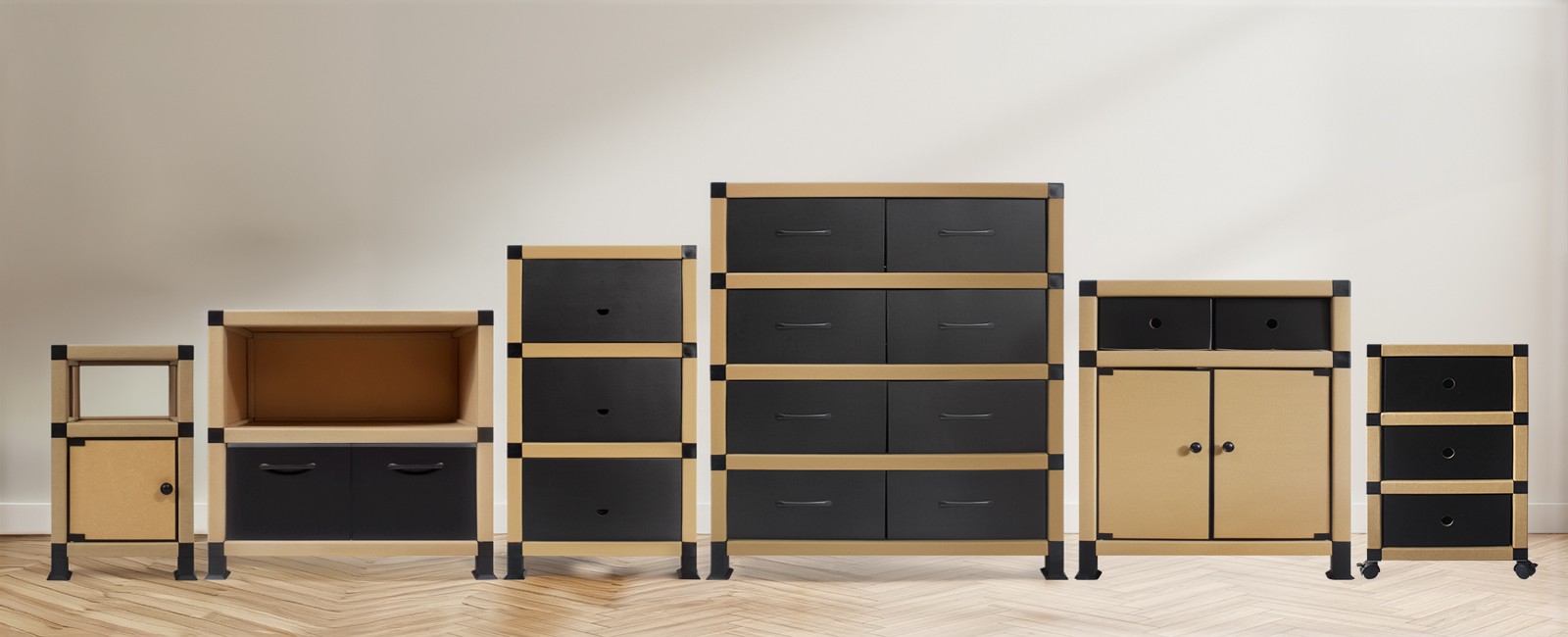
Most conversations about sustainable furniture stop at recycling. Reclaim the wood, remanufacture the steel, melt down the plastic, and call it green. But what if the material itself grew on trees, could be engineered into furniture strong enough for daily use, and returned to the earth without a trace? That is the premise behind
paper furniture, and it is reshaping how designers, renters, and businesses think about the entire lifecycle of the objects they live and work with.
The Limits of the Traditional Sustainability Hierarchy
The furniture industry has developed a useful framework for thinking about environmental impact, often called the "sustainability hierarchy." At the top sits reuse, giving existing products a second life. Below that comes remanufacturing, where components are stripped, repaired, and reassembled. Recycling, breaking materials down to raw inputs, ranks lower because it consumes significant energy. At the bottom sits new manufacturing, which extracts virgin resources and generates the most waste.
This hierarchy is valuable, but it shares a blind spot: every tier assumes furniture made from wood, metal, or plastic. None of them accounts for a material that is inherently renewable, lightweight, biodegradable, and engineered for structural strength. Paper-based furniture does not fit neatly into the existing ladder because it creates an entirely new rung, one that starts renewable and ends compostable, with minimal energy required at every step in between.
Engineered Paper: Stronger Than You Think
The word "paper" often conjures images of flimsy sheets and folding origami. But engineered paper furniture is built from high-strength kraft paper tubes and reinforced paper panels, combined with patented multi-prong polypropylene connectors. The result is a structural system that can support real-world loads.
Real Performance Claims from Manufacturers
MINHOU UNIMAX, a paper furniture manufacturer based in Fuzhou, China, states that its furniture weighs approximately 20 to 30 percent as much as traditional furniture while still supporting an adult weighing up to 80 kg on selected structures. The company also reports that its bookshelves can carry a total load of 50 kg. These figures are manufacturer claims and should be verified for specific models before commercial use, but they illustrate that engineered paper is not a novelty material. It is a load-bearing building system.
The key lies in the engineering. High-strength kraft paper receives special treatment for water and stain resistance. Patented three-way and multi-prong connector systems distribute weight efficiently across joints, allowing repeated assembly and disassembly without degrading the structure. This is not cardboard in the shipping-box sense. It is a precision-manufactured material system designed for furniture-grade performance.
Tool-Free Assembly as a Sustainability Feature
Sustainability is not only about materials. It is also about the energy and resources consumed during use, transport, and end-of-life disposal.
Tool-free assembly furniture addresses this directly: components slot together using connectors, with no screws, Allen keys, or power tools required.
This has practical implications beyond convenience. Furniture that assembles without tools can also be disassembled without tools, which means it can be flat-packed for moving, stored compactly between uses, or broken down for recycling at end of life. A renter who moves every year can take their wardrobe apart, stack the panels in a car trunk, and rebuild it in a new apartment, all without hardware or professional help. That repeated disassembly and reassembly cycle extends the useful life of the product and keeps it out of landfills longer.
From Factory to Doorstep: The Flat-Pack Advantage
Traditional furniture is bulky. It ships mostly assembled or in large, heavy boxes that consume container space and fuel.
flat pack furniture made from paper tubes and panels ships disassembled in compact cartons, dramatically reducing shipping volume.
For exporters and wholesalers, this matters. More units fit in a single container, which lowers per-unit shipping emissions and costs. For end consumers, it means the furniture arrives in a manageable package that one person can carry and unpack. The environmental benefit compounds: less packaging material, less fuel per unit shipped, and less warehouse space required for storage.
Full Lifecycle: From Tree to Furniture to Soil
The sustainability hierarchy discussed earlier ranks recycling below reuse and remanufacturing because recycling consumes energy. But
recyclable furniture made from paper bypasses this problem. Paper is one of the most widely recycled materials on the planet, with established collection streams in nearly every municipality. When a paper bookshelf or bedside table reaches the end of its service life, it does not require specialized dismantling or industrial processing. It goes into the standard paper recycling stream, or, because it is biodegradable, it can compost naturally.
MINHOU UNIMAX notes that its paper furniture typically has a service life of one to five years depending on materials, construction, use, and environment, and that service life may exceed five years under suitable conditions. The company positions its products as best suited for light-use, storage, decorative, transitional, and flexible-space applications rather than permanent heavy-load core furniture. This honest framing helps buyers choose the right product for the right purpose, and it underscores that paper furniture is designed for a specific, practical niche in the sustainability landscape.
Where Paper Furniture Fits: Homes, Offices, and Flexible Spaces
The versatility of paper furniture makes it suitable for a wide range of applications that conventional sustainable furniture struggles to address:
Rental Apartments and Dormitories
Lightweight, tool-free, and easy to disassemble for moving. Paper bedside tables, wardrobes, and storage organizers can be assembled in minutes and packed flat when a lease ends. Products like the Paper Bedside Dresser (UM24015) and Paper Bedroom Closet (UM24061) are designed specifically for these transient living situations.
Offices and Workspaces
Sustainable office furniture made from paper offers businesses a way to furnish workspaces with a lower carbon footprint. Paper bookcases, storage cabinets, and organizers provide functional storage while signaling a genuine commitment to environmental responsibility, not just a recycling program.
Pop-Up Stores and Temporary Exhibitions
Retailers and event organizers need furniture that is easy to transport, quick to assemble, and inexpensive enough to be disposable without guilt. Paper furniture fits this use case perfectly: flat-pack shipping, tool-free assembly, and full recyclability at end of event.
Children's Rooms and Play Areas
Paper desks, seating, and game tables are lightweight enough for children to move themselves and are made from materials free from the formaldehyde and heavy metals found in some conventional furniture. MINHOU UNIMAX provides test reports covering formaldehyde, cadmium, phthalates, and other substances, and has been a member of BSCI and FSC for years.
What to Look for When Choosing Paper Furniture
Not all paper furniture is created equal. If you are considering
green alternative to wood furniture, look for these quality indicators:
First, check the connector system. Patented multi-prong or three-way connectors distribute load more effectively than simple friction-fit joints, and they allow repeated assembly without wear. Second, ask about surface treatment. Quality paper furniture should have water-resistant and stain-resistant coatings that protect the material from everyday spills and humidity. Third, verify certifications. Look for FSC membership, BSCI compliance, and test reports for formaldehyde, load capacity, and chemical safety. Fourth, review the load specifications for your specific model. A bookshelf rated for 50 kg of books is suitable for home or office use, but it is not a replacement for a structural shelving system in a commercial warehouse.
Finally, consider the manufacturer's track record. MINHOU UNIMAX has manufactured home decor and furnishings since 2009 and holds patents on its connector structures. The company offers 33 products across 8 categories, ranging from bedside tables and wardrobes to children's desk sets and pet houses, all built on the same paper-tube-and-connector platform.
A Material That Grows Back
The furniture industry's sustainability conversation has spent years focused on doing less harm: recycling more, wasting less, remanufacturing instead of discarding. Paper furniture offers a different proposition entirely. It starts with a material that grows back, engineers it into furniture strong enough for daily use, ships it flat to reduce emissions, and returns it to the earth or the recycling stream without specialized processing.
It is not a replacement for every piece of furniture in every setting. But for renters, students, offices, pop-up retailers, event organizers, and anyone furnishing a flexible or temporary space, it represents a genuinely new option, one that sits outside the traditional sustainability hierarchy because it rewrites the assumptions that hierarchy was built on.
Ready to Explore Paper Furniture?
Browse the full catalog of tool-free, flat-pack, recyclable paper furniture from MINHOU UNIMAX. From bedside tables and wardrobes to bookcases, children's desks, and pet houses, every product is engineered for real-world strength and designed to return to the earth.
View All Products